

Home
plus.maths.org

Secondary menu

  • My list
  • About Plus
  • Sponsors
  • Subscribe
  • Contact Us
  • Log in
  • Main navigation

  • Home
  • Articles
  • Collections
  • Podcasts
  • Maths in a minute
  • Puzzles
  • Videos
  • Topics and tags
  • For

    • cat icon
      Curiosity
    • newspaper icon
      Media
    • graduation icon
      Education
    • briefcase icon
      Policy

    Popular topics and tags

    Shapes

    • Geometry
    • Vectors and matrices
    • Topology
    • Networks and graph theory
    • Fractals

    Numbers

    • Number theory
    • Arithmetic
    • Prime numbers
    • Fermat's last theorem
    • Cryptography

    Computing and information

    • Quantum computing
    • Complexity
    • Information theory
    • Artificial intelligence and machine learning
    • Algorithm

    Data and probability

    • Statistics
    • Probability and uncertainty
    • Randomness

    Abstract structures

    • Symmetry
    • Algebra and group theory
    • Vectors and matrices

    Physics

    • Fluid dynamics
    • Quantum physics
    • General relativity, gravity and black holes
    • Entropy and thermodynamics
    • String theory and quantum gravity

    Arts, humanities and sport

    • History and philosophy of mathematics
    • Art and Music
    • Language
    • Sport

    Logic, proof and strategy

    • Logic
    • Proof
    • Game theory

    Calculus and analysis

    • Differential equations
    • Calculus

    Towards applications

    • Mathematical modelling
    • Dynamical systems and Chaos

    Applications

    • Medicine and health
    • Epidemiology
    • Biology
    • Economics and finance
    • Engineering and architecture
    • Weather forecasting
    • Climate change

    Understanding of mathematics

    • Public understanding of mathematics
    • Education

    Get your maths quickly

    • Maths in a minute

    Main menu

  • Home
  • Articles
  • Collections
  • Podcasts
  • Maths in a minute
  • Puzzles
  • Videos
  • Topics and tags
  • Audiences

    • cat icon
      Curiosity
    • newspaper icon
      Media
    • graduation icon
      Education
    • briefcase icon
      Policy

    Secondary menu

  • My list
  • About Plus
  • Sponsors
  • Subscribe
  • Contact Us
  • Log in
  • Watch and learn?

    20 November, 2016

    Scientists are a bit like bird watchers. They set up their experiment and then watch quietly from their hide to see what nature reveals to them, taking no part in the action. Thousands of years' worth of science are built on this approach.

    Modern theories, however, tell a different story. Quantum mechanics suggests that the very act of observation can change what is being observed. The very vastness of the cosmos means we need to understand our place in it before we can draw conclusions about it. How can this be? This series of articles and videos explores some basic questions about the role of the observers in physics.

    Watching the cosmos — When it comes to the entire cosmos, we humans are incredibly small and insignificant. But that's precisely why we need to take ourselves into account when thinking about the Universe. Find out why with this article and video.

    Watch and learn — This article and video give a brief introduction to the strange theory of quantum mechanics and how it appears to afford a special role to observers.
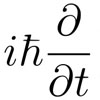
    Is it the theory? — Since quantum mechanics predicts such strange things about the world, should we replace it by a better theory, or perhaps extend it?

    Is it us? — If observers can influence the outcomes of measurements, then do these observes need to be conscious? Does consciousness play a special role in physics at all? Find out more with this article and video.
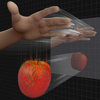
    Is it many worlds? — One way of making quantum mechanics independent of observers is to accept that we live in many parallel worlds.

    In this video philosopher of physics David Wallace and theoretical physicist Adrian Kent give a brief introduction to role of the observer in quantum mechanics and what it means for interpretations of the theory.

    This article first appeared on the FQXi Communities website.
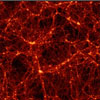
    The patchwork multiverse — What's the most likely value of the cosmological constant that would be seen by observers in our Universe? The answer leads to experimental evidence for string theory.



    FQXi logo

    This package is part of our Who's watching? The physics of observers project, run in collaboration with FQXi. Click here to see more articles and videos about questions to do with observers in physics.

    Read more about...
    FQXi2016
    The physics of observers
    quantum mechanics
    cosmology
    Everett interpretation
    video
    • Log in or register to post comments

    Read more about...

    FQXi2016
    The physics of observers
    quantum mechanics
    cosmology
    Everett interpretation
    video
    University of Cambridge logo

    Plus is part of the family of activities in the Millennium Mathematics Project.
    Copyright © 1997 - 2025. University of Cambridge. All rights reserved.

    Terms