









complex number
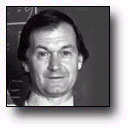
Will we ever be able to make computers that think and feel? If not, why not? And what has all this got to do with tiles? Plus talks to Sir Roger Penrose about all this and more.
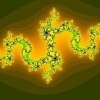
Some news on Julia sets

In issue 29 of Plus, we heard how a simple mathematical equation became the subject of a debate in the UK parliament. Chris Budd and Chris Sangwin continue the story of the mighty quadratic equation.

Mathematician and physicist John Baez declares himself fascinated by exceptions in mathematics. This interest has led him to study the octonions, and, through them, to find out more about the origins of complex numbers and quaternions. In the first of two articles, he talks about connections between algebra and geometry, and the importance of lateral thinking in mathematics.

Computer generated movies and electronic games: Joan Lasenby tells us about the mathematics and engineering behind them.

Mathematician and physicist John Baez declares himself fascinated by exceptions in mathematics. This interest has led him to study the octonions, and, through them, to find out more about the origins of complex numbers and quaternions. In the second of two articles, he talks about the characters of the different dimensions, beauty and utility in mathematics, and just why he likes dimension 8 so much.
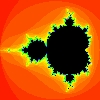
You've probably seen pictures of the famed Mandelbrot set and its mysterious cousins, the Julia sets. In this article Robert L. Devaney explores the maths behind these beauties and shows that they're loaded with mathematical meaning.

In the fourth and final part of our series celebrating 300 years since Leonhard Euler's birth, we let Euler speak for himself. Chris Sangwin takes us through excerpts of Euler's algebra text book and finds that modern teaching could have something to learn from Euler's methods.

Complex numbers — what are they, how do they work and what do they have to do with computer-generated movies, fractals and chaos? This teacher package brings together all Plus articles on complex numbers and gives some handy links to related problems on our sister site NRICH.