
What makes a perfect football? Anyone who plays or simply watches the game could quickly list the qualities. The ball must be perfectly round and retain its shape and internal pressure after a lot of physical abuse. It should be bouncy, but not too lively when kicked or headed and it must not absorb water. And finally it should move about in a pacey manner when passed between the players and be capable of impressive turns of speed for shots at goal.
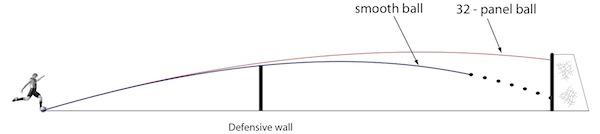
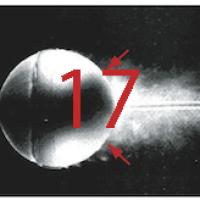
This last point may seem trivial: surely footballs go faster the harder they're kicked? This is broadly true, but how much of this initial speed is retained in flight depends critically on what happens as air flows around the ball's surface. Probably more research is devoted to this factor than any other aspect of the ball's design. To see why and learn more about the history of this design, read this article.