
For policy makers
The mathematical sciences are becoming ever more important as key tools in understanding and addressing societal and individual challenges — from artificial intelligence to climate change and public and individual health. At the same time, mathematics remains one of the hardest fields to access for people who are not already experts.
Policy makers are often confronted with complex mathematical concepts and applications of mathematics and data science. Their task is to make decisions based on the evidence provided or to decide if and how advances powered by mathematics may be used for the public good.
Our aim is to support policy makers by providing a gateway to mathematics and related sciences, in particular to current research in these fields. On this page you will find links to content that explains key concepts relevant to a range of areas in just a few words.

Mathematics for Policy
Mathematics is a key compenent of effective policy. These articles explore themes related to how maths researchers and policymakers work together.

Building bridges between modelling and policy
We meet some of the researchers who are trying to translate between the two very different worlds of mathematics and politics.

Providing the best evidence
How do mathematicians help policy makers make the best decisions? Understanding techniques for evidence synthesis and review.

What makes a modelling paper useful for policy?
Researchers, policy makers and communicators have distilled out some key principles for making mathematical research more useful for policy makers.
Mind the data gap
Disruptions to public services are annoying - but the data about those disruptions is more useful than you might think.
On artificial intelligence
The rise of artificial intelligence is simultaneously exciting and worrying and presents a range of opportunities and challenges. Research in AI relies on developments in computer science and technology, but the techniques under the hood if AI are mathematics. You can find out some of the basics, and some of the current research, in these articles.

Maths in a minute: Machine learning and neural networks
A quick intro to the maths that powers AI.

Artificial intelligence and deep learning: Your questions answered
From one sentence explainers to in-depth explorations, our FAQ guides you through the world of AI.
Our latest content:

Has AI cracked a $1m maths problem?
There's been an announcement that an AI system solved one of the most famous problems in maths. Here's a quick look at the problem and why the announcement is significant.
See all our content on artificial intelligence and machine learning
On health and medicine
The mathematical sciences inform health and medicine in a variety of ways. Statistics is essential to understand the risk we face from diseases and to assess the harms and benefits of medical treatments. Mathematical models help us understand the danger posed by infectious diseases, and the inner workings of our bodies. As the driving force behind artificial intelligence, mathematics may well revolutionise healthcare. Our content is designed to help you understand some of the concepts involved.

Disease modelling for beginners
Find out more about how mathematical models help us understand epidemics and decide which measures to take to stop them.

Evaluating a medical treatment: How do you know it works?
Randomised controlled trials (RCTs) are the cornerstone of health statistics. Find out how they work in this article.

Understanding uncertainty: The many ways of spinning risk
Learn about some of the pitfalls of using statistics, particularly related to health and medicine.
Our latest content:
Maths in a minute: Who's a hub in network science?
In a network, not all nodes are created equal. Find out about three neat ways of measuring the importance of a node.
On climate change
In the midst of a climate crisis mathematical models help us understand the impact climate change is likely to have on us and our planet and assess the impact of efforts to try and curb it. Find out more about basic concepts, as well as current research, in these articles.

Climate change: Does it all add up?
How do you go about predicting something as complex as the Earth's climate? This article explores how climate models work.

How to predict our changing climate
Hear from two climate modelling experts, Emily Shuckburgh and Chris Budd, about climate modelling, the uncertainties involved, and why the predictions need to be taken seriously despite those uncertainties.
Our latest content:
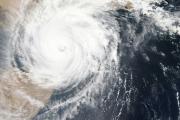
A perfect storm for hurricanes
Why was the 2025 Atlantic hurricane season different from previous seasons? Early career researcher Charles Powell analysed the data, helping insurance company Inigo in the process.
On mathematical modelling
Mathematical modelling is one the most powerful tools in science and engineering. It plays a vital role in the three topics mentioned on this page, but in many areas too. Here is some content which explains how it works

Maths in a minute: Mathematical models
A basic introduction to the most powerful tools in science and engineering.
Maths in a minute: Numerical weather prediction
Find out how models are used to predict the weather.

Maths in a minute: The logistic map
Learn how to model a population of animals and find out about chaos theory in the process.

Climate modelling made easy
Make your own climate prediction with this simple, but powerful, model!
Our latest content

Joe Hilton: Striking the balance with health economics
Should a life-saving, but expensive, cancer drug be made available on the NHS even though it only benefits very few people? We spoke to Joe Hilton, a health economist, to understand more about how difficult decisions like this one are made.