
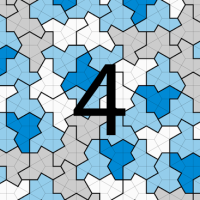
Tiles and tessellation can feel like very ordinary things. We are surrounded by them from bathrooms to fireplaces to quilts.
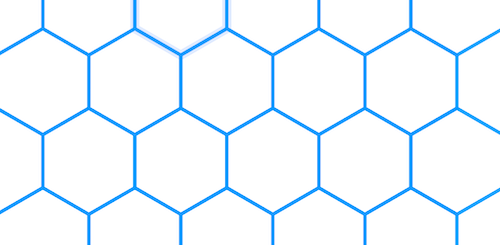
Most of the tilings that we are familiar with are periodic. If you were to pick the whole thing up, move it to the left or right by the width of a tile, and then put it down again, the pattern you'd see would look exactly the same as what you saw to start with. The same would apply if you moved it up or down by the height of a tile, and even if you moved it diagonally in the directions indicated by the diagonals of the squares. You can make periodic tilings with a range of shapes: squares, triangles, regular hexagons, even by combining several different shapes.
But for centuries, mathematicians have been wondering whether you could find a single shape that can tile the entire plane (without overlaps or gaps) and for which the pattern you produce is not periodic. If you pick such a pattern up and move it along in any direction by any distance, the picture you see will never look the same as what you saw to start with. Relevant ideas appear in the work of the 16th century artist Albrecht Dürer and the 17th century polymath Johannes Kepler. In the 1970s the eminent mathematician Roger Penrose built on Kepler's ideas to discover aperiodic tilings that involve more than one shape.
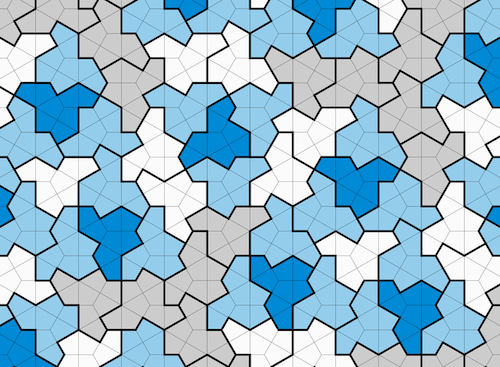
But it was only in 2023 that an aperiodic monotile was discovered. To find out more and see the beautiful patterns that it makes, read our article on the discovery.