
News story
How does gravity work?
And what are gravitational waves?


Many mathematicians find the pure and tight patterns of juggling as irresistible as those of mathematics. Burkard Polster explains how to get to grips with the bewildering range of juggling possibilities and invites you to do your own virtual juggling.

On May 22nd 2009 the English Premier league had one more match day ahead. Taking up a challenge from the BBC radio, David Spiegelhalter and Yin-Lam Ng used statistics to predict the outcome of the last matches — and they were 90% correct. Find out how they did it.
Tilings have adorned buildings from ancient Rome to the Islamic world, from Victorian England to colonial Mexico. But while it sometimes seems free from worldly limitations, tiling is a very precise art, where not much can be left to chance. We can push and turn and wiggle, but if the maths is not right, it isn't going to tile. Josefina Alvarez and Cesar L. Garcia investigate.

In 1997 Andy Green was the first to break the sound barrier in his car Thrust SSC, which reached speeds of over 760mph. Now he and his team want to push things even further with a car called Bloodhound, designed to reach the dizzy heights of 1,000mph, about 1.3 times the speed of sound. Ben Evans explains how maths is used to build this car.

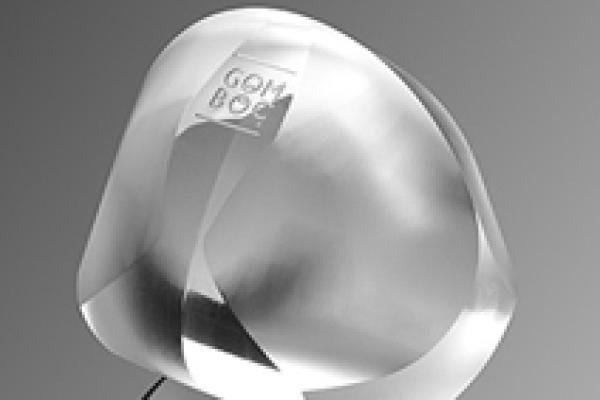
A Gömböc is a strange thing. It looks like an egg with sharp edges, and when you put it down it starts wriggling and rolling around as if it were alive. Until quite recently, no-one knew whether Gömböcs even existed. Even now, Gábor Domokos, one of their discoverers, reckons that in some sense they barely exists at all. So what are Gömböcs and what makes them special?