
Article

Outer space: A very peculiar principle

If you manage a large organisation, then people will come and go. There are always decisions to make about promoting people, promising newcomers versus experienced middle managers, all of whom are aspiring to move up the corporate ladder. But is it better to promote the least competent rather than the most competent? Some new research suggests that it may be.

Article
carrot

This is not a carrot: Paraconsistent mathematics

Paraconsistent mathematics is a type of mathematics in which contradictions may be true. In such a system it is perfectly possible for a statement A and its negation not A to both be true. How can this be, and be coherent? What does it all mean?

Article
hourglass with clock behind

What is time?

Everyone knows what time is. We can practically feel it ticking away, marching on in the same direction with horrifying regularity. Time has enslaved the Western world and become our most precious commodity. Turn it over to the physicists however, and it begins to morph, twist and even crumble away. So what is time exactly?
Article

Time and the multiverse

Why can we remember the past and not the future? Why does time appear to move in only one direction when the laws of physics have no preferred direction in time? According to one physicist, it might be because we live in a bubble multiverse.
Article

The crystallising Universe

According to Einstein, the past, present and future have exactly the same character - so why do we feel that there is a particular moment we call "now"? The physicist George Ellis looks for an answer in the curious laws of quantum mechanics.
Article

The only way is up: constructing the Heron Tower

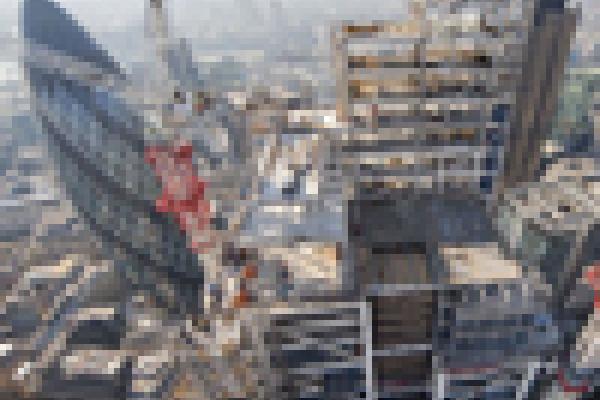
Looking out to Canary Wharf, to the arch at Wembley Stadium, and down onto the Gherkin, the 700 people working on the construction site of the Heron Tower in London had one of the best views in London. Plus was lucky enough to speak to two engineers involved in building the tower and asked how maths was involved in the construction of such an impressive addition to the London skyline.
News story

Students keep falling in love with maths

Who said that people don't like maths? Numbers of entries to maths A and AS levels across the UK have again increased this year. The number of students taking maths A level has risen by 7.8% compared to last year and A level further maths entries have risen by 5.2% At AS level maths has seen an increase of 25.3% compared to last year and further maths an increase of 24.7%. The number of students taking A level maths is now higher than it has been for almost two decades.
News story

CERN needs you!

Here's your chance to venture to the frontiers of physics using your very own computer. This week CERN began public testing of LHC@home 2.0, a project that enlists the computing power of volunteers from around the world to help simulate high-energy collisions of protons in the LHC.
News story

Stretch, but without the wrinkles

A team of nanoengineers have constructed new materials that don't wrinkle when you stretch them. This makes them similar to tissue found in the human body, so they may in the future be used to repair damaged heart walls, blood vessels and skin.
News story
3D graph

Convex is complex

Convex or concave? It's a question we usually answer just by looking at something. It's convex if it bulges outwards, and concave if it bulges inwards. But when it comes to mathematical functions, things aren't that simple. A team of computer scientists from the Massachusetts Institute of Technology have recently shown that deciding whether a mathematical function is convex can be very hard indeed.
News story

Engineering — it is rocket science

This summer the Royal Institution is running a series of workshops as part of its Engineering Week where you will have a chance to try your hand at engineering and discover it is rocket science, underwater robotics, hip joint design, crash testing and much more!
Article
velodrome

How the velodrome found its form

The Velodrome, with its striking curved shape, was the first venue to be completed in the London Olympic Park. Plus talks to structural engineers Andrew Weir and Pete Winslow from Expedition Engineering, who were part of the design team for the Velodrome, about how mathematics helped create its iconic shape.