Finding your way home without knowing where you are
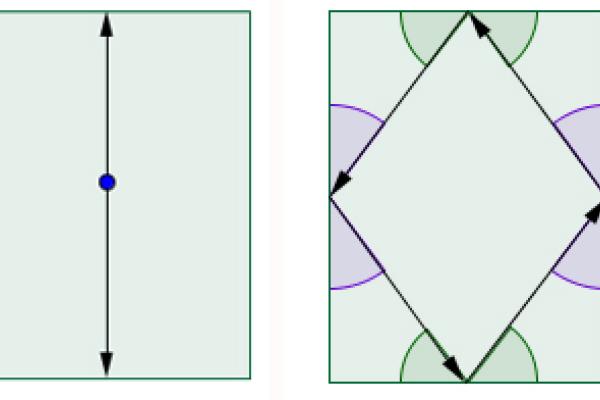
Foraging ants have a hard life, embarking on long and arduous trips several times a day, until they drop dead from exhaustion. The trips are not just long, they also follow complex zig-zag paths. So how do ants manage to find their way back home? And how do they manage to do so along a straight line? Their secret lies in a little geometry.
The Abel Prize 2011 goes to John Milnor
Winding numbers: Topography and topology II
Is space like a chessboard?
Outer space: Ping-Pong is coming home
Celebrating mathematical women
Dividing Walls: Topology and topography I
Picking holes in mathematics
In the 1930s the logician Kurt Gödel showed that if you set out proper rules for mathematics, you lose the ability to decide whether certain statements are true or false. This is rather shocking and you may wonder why Gödel's result hasn't wiped out mathematics once and for all. The answer is that, initially at least, the unprovable statements logicians came up with were quite contrived. But are they about to enter mainstream mathematics?
Create your own mathematical mysteries
What makes an object into a musical instrument?
Many things make a noise when you hit them, but not many are commonly used to play music — why is that? Jim Woodhouse looks at harmonic and not so harmonic frequencies and at how percussion instruments are tuned.
Searching for the missing truth
Many people like mathematics because it gives definite answers. Things are either true or false, and true things seem true in a very fundamental way. But it's not quite like that. You can actually build different versions of maths in which statements are true or false depending on your preference. So is maths just a game in which we choose the rules to suit our purpose? Or is there a "correct" set of rules to use? We find out with the mathematician Hugh Woodin.