







uncertainty
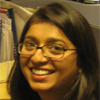
Rupa Patel never wanted to be a financial engineer — she wanted to be a maths teacher. However, her skills in conveying difficult mathematical concepts to others, as well as a love of maths, enticed her into the exciting field of financial mathematics. Now she models risk, travels Europe and occasionally finds time to herself to examine the maths of her job in detail.

A biologist has developed a blood test for detecting a certain minor abnormality in infants. Obviously if you have blood samples from 100 children, you could find out which children are affected by running 100 separate tests. But mathematicians are never satisfied by the obvious answer. Keith Ball uses information theory to explain how to cut down the number of tests significantly, by pooling samples of blood.

Why rankings don't work

Chuck Gill caught the space bug as a child when watching Alan Shepherd launch into space. Since then he's worked as a US Air Force navigator, a satellite operator, and in the US intelligence service. These days he's busy reducing carbon emissions and preparing London for the 2012 Olympics. Plus went to see him to find out more about his career.

What's the risk of passive smoking? Or climate change? How big is the terrorist threat? And should we trust league tables? These issues concern all of us, but it's not always easy to make sense of the barrage of media information. David Spiegelhalter, Winton Professor for the Public Understanding of Risk, gives Plus his take on uncertainty.
Some spurious statistics

Use our animations to find out