

Maths in a minute: Number mysteries
Number theory is famous for problems that everyone can understand and that are easy to express, but that are fiendishly difficult to prove. Here are some of our favourites.
The Goldbach conjecture
The Goldbach conjecture is named after the mathematician Christian Goldbach who formulated it in the middle of the eighteenth century. It states that any even natural number greater than 2 can be written as the sum of two prime numbers.
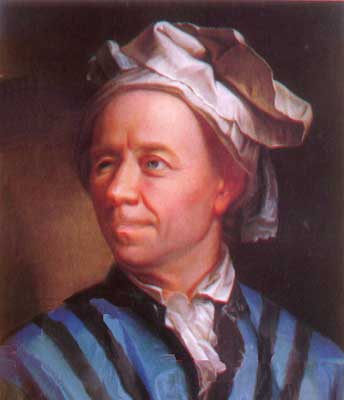
Leonard Euler (1707-1783) corresponded with Christian Goldbach about the conjecture now named after the latter.
It is easy to see that this is true for the first few even numbers greater than 2:
4=2+2
6=3+3
8=3+5
10=5+5=3+7.
This seems so straightforward you might be tempted to try and prove it yourself — and you'd be in very good company as some of the brightest mathematical minds have been chiselling away at the conjecture ever since it was first pronounced. But so far without success. The closest result that has been proved, in 1995, says that every even number is the sum of at most six primes.
There is a similar statement, called the weak Goldbach conjecture, which says that every odd natural number greater than 5 is the sum of three primes. Again we can see that this is true for the first few odd numbers greater than 5:
7 = 3+2+2
11=3+3+5
13=3+5+5
17=5+5+7.
This statement is called "weak" because once someone finds a proof for the ordinary "strong" Goldbach conjecture, the weak one can be deduced from it.
In 1938 Nils Pipping showed that the (strong) Goldbach conjecture is true for even numbers up to and including 105. The latest result, established using a computer search, shows it is true for even numbers up to and including 4 x 10¹⁸ — that's a huge number, but for mathematicians it isn't good enough. Only a general proof will do.
Perfect numbers
A perfect number is a number that's the sum of all of its divisors (excluding itself). For example, 6 is a perfect number because its divisors (apart from 6 itself) are 1, 2 and 3, and
6 = 1 + 2 + 3.
The next perfect number is 28, which has divisors 1, 2, 4, 7 and 14, and:
28 = 1 + 2 + 4 + 7 + 14.
Euclid, depicted with a compass in Raphael's painting The school of Athens.
The next three perfect numbers are 496, 8128 and 33,550,336.
The gaps between perfect numbers are as wide as their discovery has been painstaking. The first four perfect numbers seem to have been known to the Greeks, the fifth and sixth weren't written down explicitly until the 15th century and the seventh followed in the 16th century. Today we know of 48 perfect number, the largest of which has over 34 million digits. All of these 48 are even. This raises two questions:
- Are there infinitely many perfect numbers?
- Are there any odd perfect numbers?
So far no one has been able to answer these questions with a conclusive proof.
One thing that was already known to the Greek mathematician Euclid over 2,000 years ago is that if p is a prime number and 2p-1 is also a prime number, then 2p-1(2p-1) is an even perfect number. For example,
21(22-1) = 6
22(23-1) = 28.
The 18th century mathematician Leonhard Euler proved that every even perfect number is of this form. The largest known perfect number, the one with over 34 million digits, is
257885160 x (257885161−1).
This leads us straight to our next number mystery.
Mersenne primes
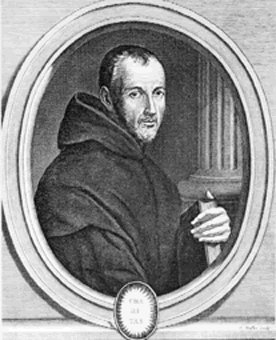
Marin Mersenne, (1588-1648).
Prime numbers are those numbers that are divisible only by themselves and 1. The first few are 2, 3, 5, 7, and 11. Unlike for perfect numbers we do know that there are infinitely many of them. The proof for that was furnished by Euclid, however there is no easy recipe that generates all the prime numbers. This is where numbers of the form 2p-1, where p is a prime, come in useful. These are called Mersenne numbers, after the French monk Marin Mersenne (1588-1648) who studied them, and they have a good chance of being prime themselves.
The question is, are there infinitely many such Mersenne primes? Mathematicians believe that there probably are, but again nobody has as yet been able to prove that conjecture. A total of 48 Mersenne primes have been found so far, the largest, discovered in January 2013, being
257885161 − 1.
These correspond to the 48 known perfect numbers. The search for larger and larger Mersenne primes continues, as does the search for a conclusive proof that there are infinitely many.
And there is more...
Another favourite number theory mystery is the twin prime conjecture, which states that there are infinitely many pairs of primes that are 2 apart. There's been recent progress on this, so we refer you to our news story. One mystery that has been solved, after over 350 years of effort, is Fermat's last theorem. We recently celebrated the twentieth anniversary of the announcement of its proof — you can find out more here. That's probably enough to fill a minute, but if you haven't had enough you can read more about number theory, prime numbers, Mersenne primes and the search for larger and larger primes here on Plus.
Anonymous
One might have expected the apparent proof of the weak Goldbach conjecture two months ago to have been considered notable enough to include in this article.
Anonymous
Yes,
If given:p=prime and 2^(p-1)(2^p-1)=even perfect number, the fact that there are infinitely many prime numbers =>there are infinitely many even perfect numbers=>there are infinitely
many perfect numbers.
Another question is if there are infinitely many odd perfect numbers.
Marianne
For 2^(p-1)(2^p-1) to be a perfect number we need both p and 2^p-1 to be prime. Since it is not known if there are infinitely many primes of the form 2^p-1 (Mersenne primes) the fact that there are infinitely many primes does not imply that there are infinitely many perfect numbers.