
Home
plus.maths.org

Secondary menu

  • My list
  • About Plus
  • Sponsors
  • Subscribe
  • Contact Us
  • Log in
  • Main navigation

  • Home
  • Articles
  • Collections
  • Podcasts
  • Maths in a minute
  • Puzzles
  • Videos
  • Topics and tags
  • For

    • cat icon
      Curiosity
    • newspaper icon
      Media
    • graduation icon
      Education
    • briefcase icon
      Policy

    Popular topics and tags

    Shapes

    • Geometry
    • Vectors and matrices
    • Topology
    • Networks and graph theory
    • Fractals

    Numbers

    • Number theory
    • Arithmetic
    • Prime numbers
    • Fermat's last theorem
    • Cryptography

    Computing and information

    • Quantum computing
    • Complexity
    • Information theory
    • Artificial intelligence and machine learning
    • Algorithm

    Data and probability

    • Statistics
    • Probability and uncertainty
    • Randomness

    Abstract structures

    • Symmetry
    • Algebra and group theory
    • Vectors and matrices

    Physics

    • Fluid dynamics
    • Quantum physics
    • General relativity, gravity and black holes
    • Entropy and thermodynamics
    • String theory and quantum gravity

    Arts, humanities and sport

    • History and philosophy of mathematics
    • Art and Music
    • Language
    • Sport

    Logic, proof and strategy

    • Logic
    • Proof
    • Game theory

    Calculus and analysis

    • Differential equations
    • Calculus

    Towards applications

    • Mathematical modelling
    • Dynamical systems and Chaos

    Applications

    • Medicine and health
    • Epidemiology
    • Biology
    • Economics and finance
    • Engineering and architecture
    • Weather forecasting
    • Climate change

    Understanding of mathematics

    • Public understanding of mathematics
    • Education

    Get your maths quickly

    • Maths in a minute

    Main menu

  • Home
  • Articles
  • Collections
  • Podcasts
  • Maths in a minute
  • Puzzles
  • Videos
  • Topics and tags
  • Audiences

    • cat icon
      Curiosity
    • newspaper icon
      Media
    • graduation icon
      Education
    • briefcase icon
      Policy

    Secondary menu

  • My list
  • About Plus
  • Sponsors
  • Subscribe
  • Contact Us
  • Log in
  • News from the world of maths: Global war death toll should be tripled
    3 July, 2008
    Thursday, July 03, 2008

    Global war death toll should be tripled

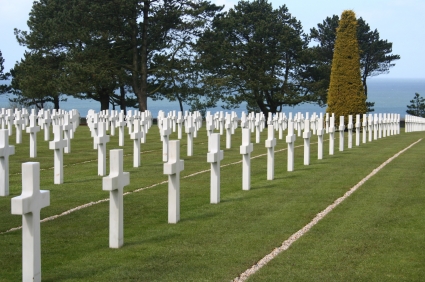
    The death toll from wars around the globe in the second half of the twentieth century should be increased by a factor of three, according to a recent mathematical study by Ziad Obermeyer and colleagues at the Institute for Health Metrics and Evaluation in Seattle, Washington.

    Estimating a war death toll is usually done by a mixture of eyewitness reports and media coverage. This involves extrapolating large numbers from sketchy data — read more about how this is done in the Plus article Body count.

    Uppsala University in Sweden, and the Peace Research Institute in Norway, both keep death toll records estimated from media coverage, but Obermeyer's study suggests that the recorded death toll for 20th century wars could have been up to three times higher than they record.

    The researchers looked at the death toll estimates gathered by the World Health Organization (WHO) — these numbers are extrapolated from telephone interviews with individuals with family members who may have died. This method is considered to be more accurate than gathering information from media reports.

    In most cases, the WHO surveys recorded much higher numbers of dead than the Norwegian and Swedish databases. For example, the WHO figures suggest that more than twice the number of people died in Vietnam than previously thought — currently recorded at two million. On average, across 12 countries, the WHO figures are three times bigger. If true, then the average annual death toll for wars between 1985 and 1994 was 378,000.

    During the 50 years covered by the study, Obermeyer suggests that there were 269,000 deaths in Bangladesh and 141,000 in Zimbabwe — nearly five times more than previously thought — and conflicts in Sri Lanka, Bosnia, Georgia and Laos are also estimated to be more costly than previously thought. However, in other countries, such as Burma, Ethiopia, Guatemala, Namibia and The Philippines, the death tolls dropped.

    The study also found that a controversial report in 2006, which estimated the death toll after the invasion of Iraq at 655,000, may have been an over-estimate. You can read more about this study in the Plus article Body count. Obermeyer revises this number down to 184,000.

    One downside of the study is that it only counts conflict fatalities and not deaths that have arisen from infectious diseases, which often afflict poor countries after war.

    posted by westius @ 2:54 PM

    0 Comments:

    • Log in or register to post comments
    University of Cambridge logo

    Plus is part of the family of activities in the Millennium Mathematics Project.
    Copyright © 1997 - 2025. University of Cambridge. All rights reserved.

    Terms