
Home
plus.maths.org

Secondary menu

  • My list
  • About Plus
  • Sponsors
  • Subscribe
  • Contact Us
  • Log in
  • Main navigation

  • Home
  • Articles
  • Collections
  • Podcasts
  • Maths in a minute
  • Puzzles
  • Videos
  • Topics and tags
  • For

    • cat icon
      Curiosity
    • newspaper icon
      Media
    • graduation icon
      Education
    • briefcase icon
      Policy

    Popular topics and tags

    Shapes

    • Geometry
    • Vectors and matrices
    • Topology
    • Networks and graph theory
    • Fractals

    Numbers

    • Number theory
    • Arithmetic
    • Prime numbers
    • Fermat's last theorem
    • Cryptography

    Computing and information

    • Quantum computing
    • Complexity
    • Information theory
    • Artificial intelligence and machine learning
    • Algorithm

    Data and probability

    • Statistics
    • Probability and uncertainty
    • Randomness

    Abstract structures

    • Symmetry
    • Algebra and group theory
    • Vectors and matrices

    Physics

    • Fluid dynamics
    • Quantum physics
    • General relativity, gravity and black holes
    • Entropy and thermodynamics
    • String theory and quantum gravity

    Arts, humanities and sport

    • History and philosophy of mathematics
    • Art and Music
    • Language
    • Sport

    Logic, proof and strategy

    • Logic
    • Proof
    • Game theory

    Calculus and analysis

    • Differential equations
    • Calculus

    Towards applications

    • Mathematical modelling
    • Dynamical systems and Chaos

    Applications

    • Medicine and health
    • Epidemiology
    • Biology
    • Economics and finance
    • Engineering and architecture
    • Weather forecasting
    • Climate change

    Understanding of mathematics

    • Public understanding of mathematics
    • Education

    Get your maths quickly

    • Maths in a minute

    Main menu

  • Home
  • Articles
  • Collections
  • Podcasts
  • Maths in a minute
  • Puzzles
  • Videos
  • Topics and tags
  • Audiences

    • cat icon
      Curiosity
    • newspaper icon
      Media
    • graduation icon
      Education
    • briefcase icon
      Policy

    Secondary menu

  • My list
  • About Plus
  • Sponsors
  • Subscribe
  • Contact Us
  • Log in
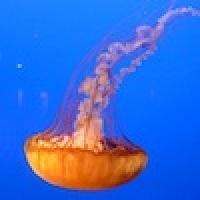
  • Plus Advent Calendar Door #6: Dining with jellyfish

    6 December, 2012

    Plus jetted across the Atlantic in February to attend the annual meeting of the American Association for the Advancement of Science in Vancouver. Not only did we feast with (not on) jellyfish at the Vancouver Aquarium, we also found out how to lose weight, how to play Big Brother on the internet, and more...


    Counting calories — Struggling with that new year's resolution to lose a few pounds? Weight not dropping off as fast as you'd expected? A new mathematical model has some good news and some bad news for you. Which would you like to hear first?


    Rubber data — Data, data, data. 21st century life provides tons of it. It's paradise for researchers, or at least it would be if we knew how to make sense of it all. This year's AAAS annual meeting in Vancouver devoted plenty of time to the question of how to understand large amounts of data. And there's one method we particularly liked. It's based on the kind of idea that gave us the London tube map.


    Counting deaths: war as a statistical problem — How many people died? It's one of the first questions asked in a war or violent conflict, but it's one of the hardest to answer. In the chaos of war many deaths go unrecorded and all sides have an interest in distorting the figures. The best we can do is come up with estimates, but the trouble is that different statistical methods for doing this can produce vastly different results . So how do we know how different methods compare?


    The podcast: AAAS meeting day 1 — From flattening the Earth to dining with the jellyfish, Plus chats about the first day at the meeting.


    The podcast: AAAS meeting day 2 — On the second day at the meeting we talked to Marcel Babin from the Université Laval. Babin uses satellite images to measure the amount of organisms, such as phytoplankton, in the Arctic ocean and studies how this changing biological diversity can both indicate, and impact on, climate change.


    Probing the dark web: the podcast — Networks loomed large at the AAAS annual meeting in Vancouver, in particular the one you're looking at right now: the Internet. Plus went along to a session on web surveillance. It sounds sinister at first, but as we found out, it's not all about Big Brother breaching your privacy. Information on the web can help us catch terrorists and criminals and it can also identify a widespread practice called astroturfing.


    Back to the 2012 Plus Advent Calendar

    Read more about...
    Advent calendar 2012
    • Log in or register to post comments

    Read more about...

    Advent calendar 2012
    University of Cambridge logo

    Plus is part of the family of activities in the Millennium Mathematics Project.
    Copyright © 1997 - 2025. University of Cambridge. All rights reserved.

    Terms