
Editorial, mathematics education, mathematics in the media, public understanding of mathematics, adrian smith
- Where is the next generation? - more bad news for maths education.
- Can Plus cure crazy scientists? - the science stereotype persists.
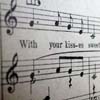
According to Shakespeare, music is the food of love. But Jeffrey Rosenthal follows Galileo's observation that the entire universe is written in the language of mathematics - and that includes music.
The tsunami of December 26th 2004 has focused the world's attention on this terrifying consequence of an underwater earthquake. Michael McIntyre explores the underlying wave mathematics.
Imagine that you're sitting in a low-flying jet just keeping pace with the tsunami in mid-ocean. You can see the ocean surface rushing past you at a speed of about 500 miles per hour. (We'll call the speed $U$.) You can't see the tsunami itself, however. Even a tsunami as energetic as the December 26th tsunami would be invisible.
The real ocean-floor motion is complicated, and generates waves of many wavelengths. The December 26th tsunami was generated by a sudden large-scale vertical displacement over an earthquake area over a thousand kilometres long in the north-south direction, and a few hundred kilometres wide in the east-west direction. That is easily large enough to generate long waves.
Plaintext: Everyday language; e.g. "This is plaintext"
Ciphertext: Enciphered language; e.g. "rgua ua xuogwerwzr"
A code is a system of secret communication in which each word in a message is replaced with another word, letter, sentence or symbol. For example:
Many people find no beauty and pleasure in maths - but, as Lewis Dartnell explains, our brains have evolved to take pleasure in rhythm, structure and pattern.
Mathematician and physicist John Baez declares himself fascinated by exceptions in mathematics. This interest has led him to study the octonions, and, through them, to find out more about the origins of complex numbers and quaternions.