Home
plus.maths.org

Secondary menu

  • My list
  • About Plus
  • Sponsors
  • Subscribe
  • Contact Us
  • Log in
  • Main navigation

  • Home
  • Articles
  • Collections
  • Podcasts
  • Maths in a minute
  • Puzzles
  • Videos
  • Topics and tags
  • For

    • cat icon
      Curiosity
    • newspaper icon
      Media
    • graduation icon
      Education
    • briefcase icon
      Policy

    Popular topics and tags

    Shapes

    • Geometry
    • Vectors and matrices
    • Topology
    • Networks and graph theory
    • Fractals

    Numbers

    • Number theory
    • Arithmetic
    • Prime numbers
    • Fermat's last theorem
    • Cryptography

    Computing and information

    • Quantum computing
    • Complexity
    • Information theory
    • Artificial intelligence and machine learning
    • Algorithm

    Data and probability

    • Statistics
    • Probability and uncertainty
    • Randomness

    Abstract structures

    • Symmetry
    • Algebra and group theory
    • Vectors and matrices

    Physics

    • Fluid dynamics
    • Quantum physics
    • General relativity, gravity and black holes
    • Entropy and thermodynamics
    • String theory and quantum gravity

    Arts, humanities and sport

    • History and philosophy of mathematics
    • Art and Music
    • Language
    • Sport

    Logic, proof and strategy

    • Logic
    • Proof
    • Game theory

    Calculus and analysis

    • Differential equations
    • Calculus

    Towards applications

    • Mathematical modelling
    • Dynamical systems and Chaos

    Applications

    • Medicine and health
    • Epidemiology
    • Biology
    • Economics and finance
    • Engineering and architecture
    • Weather forecasting
    • Climate change

    Understanding of mathematics

    • Public understanding of mathematics
    • Education

    Get your maths quickly

    • Maths in a minute

    Main menu

  • Home
  • Articles
  • Collections
  • Podcasts
  • Maths in a minute
  • Puzzles
  • Videos
  • Topics and tags
  • Audiences

    • cat icon
      Curiosity
    • newspaper icon
      Media
    • graduation icon
      Education
    • briefcase icon
      Policy

    Secondary menu

  • My list
  • About Plus
  • Sponsors
  • Subscribe
  • Contact Us
  • Log in
  • Example of the use of TDA

    Topological data analysis

    30 September, 2025

    We all know what data is and you might have heard of topology — it's a study of shapes that is a bit more lenient than geometry and usually at home within pure mathematics.

    Topological data analysis (TDA) combines the two, gaining information about real-life data by analysing its shape. It's delivered some amazing successes, for example in cancer research. And in the age of Big Data and AI it holds much promise.

    Find out more with this content!
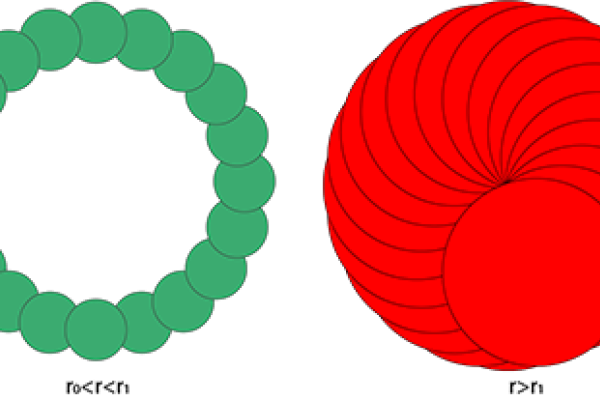
    Example of the use of TDA

    Understanding life with topology

    Can topological data analysis create a revolution in the life sciences? Here's a brief introduction to how it works and some of its applications.

    Heather Harrington

    Euromaths: Heather Harrington

    In this podcast we talk to Heather Harrington, an expert in TDA who gave a special lecture on the subject at the European Congress of Mathematics in 2024.

    Mike Hill

    Topological data analysis with Michael Hill

    Find out more about TDA and its applications, not just in the sciences, but also to answer questions surrounding social justice.
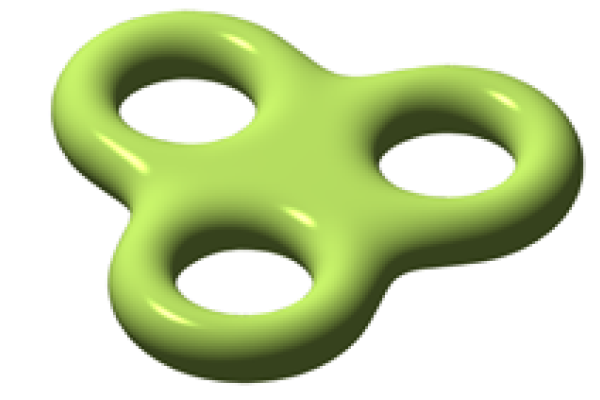
    Maths in a minute: Topology

    When you let go of the notions of distance, area, and angles, all you are left with is holes.

    TDA feature extensively at the Topological advances in the life sciences event, organised by the Newton Gateway to Mathematics, in June 2025. The event was part of a longer research programme organised by the Isaac Newton Institute for Mathematical Sciences called Equivariant homotopy theory in context.


    This content was produced as part of our collaborations with the Isaac Newton Institute for Mathematical Sciences (INI) and the Newton Gateway to Mathematics.

    The INI is an international research centre and our neighbour here on the University of Cambridge's maths campus. The Newton Gateway is the impact initiative of the INI, which engages with users of mathematics. You can find all the content from the collaboration here.

    INI logo
    Newton Gateway logo
    Read more about...
    INI
    Newton Gateway
    topology
    topological data analysis
    • Log in or register to post comments

    You might also like

    article

    Maths in a minute: Topology

    When you let go of the notions of distance, area, and angles, all you are left with is holes.

    article

    The mathematical shapes in your brain

    Join us as we follow Kathryn Hess on a mathematical mystery tour of the marvellous intricacy of the brain!

    Read more about...

    INI
    Newton Gateway
    topology
    topological data analysis
    University of Cambridge logo

    Plus is part of the family of activities in the Millennium Mathematics Project.
    Copyright © 1997 - 2025. University of Cambridge. All rights reserved.

    Terms
