
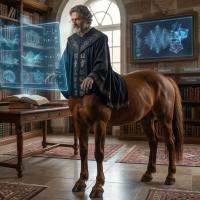
Enter the centaur
The novelty effect of artificial intelligence (AI) is wearing off. Many of us are making use of its strengths, while also learning more about the challenges it presents. Just this week I happily used AI to transcribe interviews, explain technical terms, suggest further sources, and to help me code. I also wasted a frustrating hour dealing with a courier company's chatbot that has replaced the human staff I would have previously contacted for help.
The same is true for many mathematicians. They are weaving the impressive capabilities of AI tools into their daily work while reflecting on the opportunities and challenges AI brings to their community. This was the focus of the AI for Maths and Open Science workshop held at the Isaac Newton Institute for Mathematical Sciences earlier this year. In his talk, Geordie Wiliamson, Director of the Sydney Mathematical Research Institute, gave a personal take on how working with AI has significantly changed his work as a mathematician in the last few years.
The centaur phase
For much of his mathematical career computers haven’t been very useful to Williamson. Although he loved computers as a child, "I've been consistently surprised over the last 20 years about how unhelpful computers were for me as a working mathematician." In the last few years that has completely changed – now around 80% of his research work is somehow related to AI. "This interaction is becoming stronger and will completely reshape mathematics. We're entering the centaur phase – where the strongest results are obtained as a collaboration between human and machine."
Williamson works in the area of representation theory, which allows the abstract mathematical structures that are used to study symmetry (these are called groups) to be described by the more common mathematical language of matrices. Although computers can be useful when working with large matrix representations, the matrices Williamson often works with are so large that even computers fail.
This is starting to change, Williamson says, with AI now enabling a genuine collaboration with a computer. His AI journey began when he met Demis Hassibis when they were both inducted as Fellows of the Royal Society in 2018. At the time, Williamson was the youngest living Fellow, and Hassibis was the founder of Google DeepMind and would go on to win the Nobel Prize for Chemistry for developing an AI model for predicting protein structures. Williamson described their discussion as "one of the most inspiring conversations of my life".
Guiding intuition
In 2020 Williamson began collaborating with DeepMind. The first work they did together was on a long-standing conjecture linked two seemingly different areas of mathematics. On one side of the conjecture were permutations – the different ways of mixing up a collection of things, such as the numbers from 1 to n. You can get a picture of how these permutations are related to each other by building a network (called a Bruhat graph), connecting two permutations if you can move from one to the other by simply flipping two adjacent numbers. Starting from the simple idea of permutations, complicated structures quickly emerge when considering the relationships depicted in the Bruhat graphs.
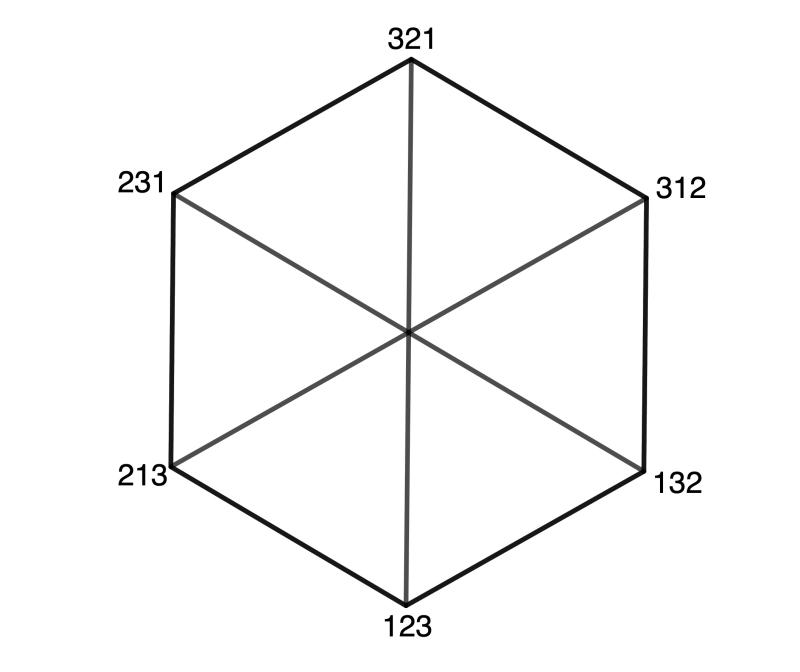
On the other side of the conjecture was one of the most fundamental objects in Williamson's area of representation theory. These are a special type of mathematical expression called the Kazhdan–Lusztig (KL) polynomials, very powerful, complicated mathematical objects that can be expressed very simply, with just a few coefficients. The conjecture – the combinatorial invariance conjecture – said there was a recipe for going from one side to the other, for calculating the KL polynomials associated with these complicated Bruhat graphs.
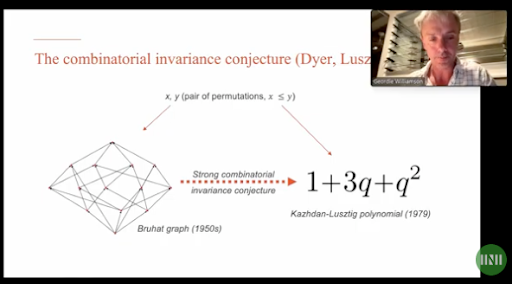
"This is exactly what neural networks are meant to be good at, this kind of distilling complicated structure into some kind of judgement," said Williamson. (Neural networks are currently the dominant approach to AI.) "So we trained a graph neural network to predict the KL polynomials and it was extraordinarily successful."
Once the researchers had this trained neural network, they could use it to guide their mathematical understanding of what was going on. "Basically the neural network was telling me that I should be paying attention to this small part of the [complicated] graph, and somehow distill the answer out of that." The AI had helped identify which parts of the complex structures were important. Then Williamson and his mathematical colleagues could step in to do the heavy lifting and formally prove the conjecture. (You can read about this work in their 2021 paper in Nature.)
Low vs high resource AI
Williamson emphasised that this work from 2021 is an example of AI-assisted mathematics that did not require vast amounts of computing resources. "These are very much low-resource AI that you can easily do on a laptop," he said. Another such example is the murmuration conjecture, where mathematicians were able to discover a completely new phenomenon in number theory using AI. (You can read more in our interview with one of the Yang-Hui He, one of the mathematicians involved.) "This is a completely new and beautiful observation in number theory," said Williamson. "It led to an explosion of activity."
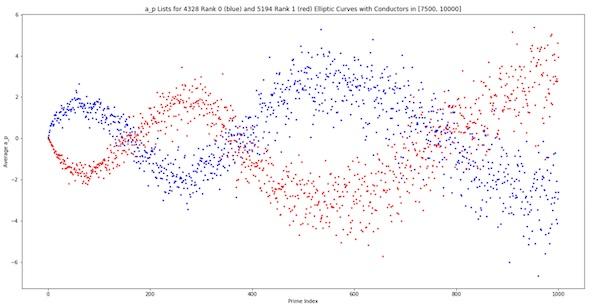
But Williamson’s recent work with DeepMind has called on significant resources. He and his colleagues were searching for examples of order within the large and complicated structures of Bruhart graphs. Mathematicians often start searching for potential examples of mathematical objects by following some kind of recipe, which in this case could be written as a small computer programme. Williamson and his colleagues used the AI coding agent AlphaEvolve to search through the space of such possible programmes, and it discovered some surprising examples that they could then explain and generalise into a formal mathematical result. (You can read more in their paper from January 2026.)
This work highlighted the importance of educating mathematicians in the possibilities of working with AI. At the moment, the people who get the most out of coding agents are those who already have some background knowledge: "Coding agents are amazing for people who already know, somewhat, what they are doing. But I don't think they are useful for people who can't already code… We need to invest a lot more into teaching mathematicians how to get the most out of these tools."
Williamson's core belief is that we are at the beginning of genuine collaboration between mathematicians and AI. There are challenges, such as which mathematicians will be able to access the most sophisticated AI, either through educational or economic limits. And fears that it will replace human mathematicians, with AI emerging that can prove or disprove any mathematical result put before.
But rather than just providing or verifying mathematical proofs, Williamson believes that AI will allow us to discover or create new mathematics. "Mathematics has this extraordinary kind of discovery component. Asking the right question, or making the right definition is often as important as finding a proof."
"Terry Tao talks about the post-rigour phase of mathematical discovery, where you operate on analogy and intuition and you make mistakes. This way of operating is crucial to high-level mathematics." Williamson is optimistic that this is where the centaur phase will reshape mathematics, combining this very human post-rigour reasoning with the powerful tools of AI: "AI maths is starting to blossom."
About this article
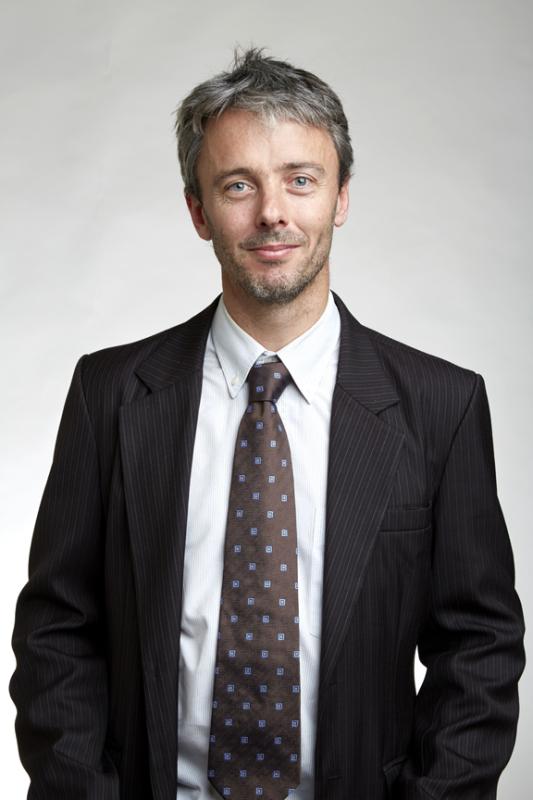
Geordie Williamson is Director of the Sydney Mathematical Research Institute and Professor of Mathematics at the University of Sydney. This article is based on his talk at the AI for Maths and Open Science workshop held at the Isaac Newton Institute for Mathematical Sciences earlier this year.
Rachel Thomas, is Editor of Plus.
(The image used as the icon for this article was created by Gemini 3.6 Flash prompting for an image of a centaur to illustrate an article about the impact of AI on mathematics.)
This content forms part of our collaboration with the Isaac Newton Institute for Mathematical Sciences (INI) – you can find all the content from the collaboration here.
The INI is an international research centre and our neighbour here on the University of Cambridge's maths campus. It attracts leading mathematical scientists from all over the world, and is open to all. Visit www.newton.ac.uk to find out more.
