Article

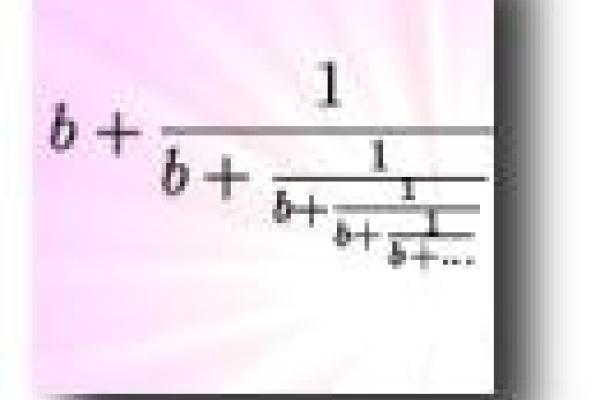
Chaos in Numberland: The secret life of continued fractions

One of the most striking and powerful means of presenting numbers is completely ignored in the mathematics that is taught in schools, and it rarely makes an appearance in university courses. Yet the continued fraction is one of the most revealing representations of many numbers, sometimes containing extraordinary patterns and symmetries. John D. Barrow explains.
Article
flying piggybank

Have we caught your interest?

Those who understand compound interest are destined to collect it. Those who don't are doomed to pay it - or so says a well-known source of financial advice. But what is compound interest, and why is it so important? John H. Webb explains.

Article
fractal

Fractal expressionism

In the late 1940s, American painter Jackson Pollock dripped paint from a can on to vast canvases rolled out across the floor of his barn. Richard P. Taylor explains that Pollock's patterns are really fractals - the fingerprint of Nature.

Article

Analemmatic sundials: How to build one and why they work

We've all seen a traditional sundial, where a triangular wedge is used to cast a shadow onto a marked-out dial - but did you know that there is another kind? In this article, Chris Sangwin and Chris Budd tell us about a different kind of sundial, the analemmatic design, where you can use your own shadow to tell the time.
Article

Mathematical mysteries: Right angle race

The German mathematician Adam Ries (1492-1559) was the author of the most successful textbook of commercial arithmetic of his day. The book, published in 1552, earned such a high reputation that the German phrase nach Adam Ries is used to this day to indicate a correct calculation.
News story

Old problem, new spin

Have you ever noticed what happens when you spin a coin on a table? As the coin starts to fall over and roll on its edge, its spin gets faster and faster until it suddenly stops altogether.
News story

Prehistoric printer

More than a century after the death of its inventor, the world's first computer printer has finally been constructed at the Science Museum in London.
News story

Gold for Goldbach

In 1998, Goldbach's Conjecture was shown by computer to be true for even numbers up to 400,000,000,000,000. In addition, some progress has been made towards formally proving the conjecture. As of this year, mathematicians with Goldbach fever have some extra incentive for their labours.
News story

Maths Year 2000

Around the country, maths is set to have a high profile this year with the launch of a new initiative.
Article
torus

In space, do all roads lead to home?

Is the Universe finite, with an edge, or infinite, with no edges? Or is it even stranger: finite but with no edges? It sounds far-fetched but the mathematical theory of topology makes it possible, and nobody yet knows the truth. Janna Levin tells us more.