Secret symmetry and the Higgs boson (Part II)
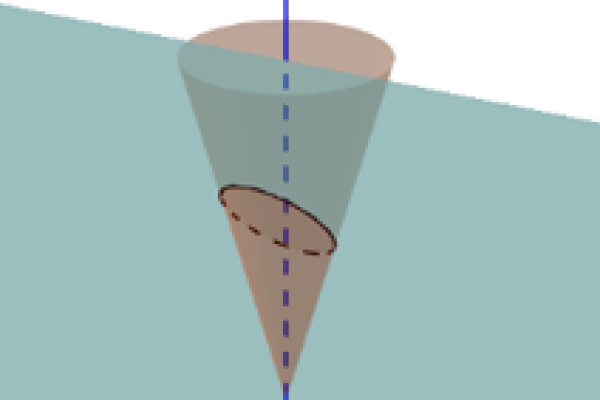
In the first part of this article we explored Landau's theory of phase transitions in materials such as magnets. We now go on to see how this theory formed the basis of the Higgs mechanism, which postulates the existence of the mysterious Higgs boson and explains how the particles that make up our Universe came to have mass.
Secret symmetry and the Higgs boson (Part I)
Phantasms of infinity
Infinity is a pain. Its paradoxes easily ensnare the unsuspecting reasoner. So over the centuries, mathematicians have carefully constructed bulwarks against its predations. But now cosmologists have developed theories that put them squarely outside the mathematicians' "green zone" of safety.
Taming infinity
Does infinity exist?
When is a goal not a goal?
Walk, trot, gallop
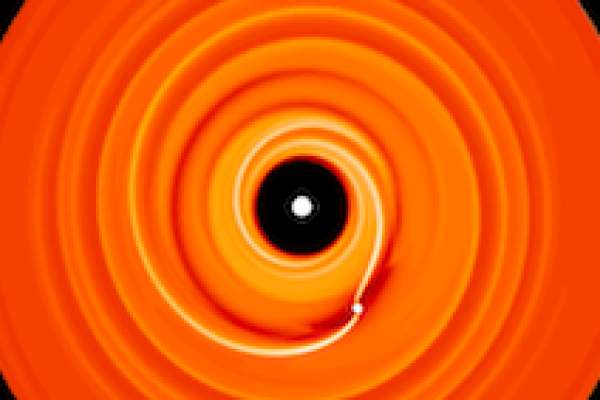
Horses, like all animals, have a number of different gaits. But how can they perform these complicated leg movements without having to stop and think? And why do they switch to a new gait when they want to go faster? Mathematics can shed some light on these questions.
Outer space: Canoeing and Kayaking
European Girls' Maths Olympiad conquers Cambridge
This month 70 teenage girls from nineteen countries including Bulgaria, Saudi Arabia and Finland came to the University of Cambridge to participate in the inaugural European Girls' Mathematical Olympiad (EGMO).
Does it pay to be nice? – the maths of altruism part i
Does it pay to be nice? Yes, it does. And we're not just talking about that warm fuzzy feeling inside, it pays in evolutionary terms of genetic success too. We talk to Martin Nowak about how the mathematics of evolution prove that being nice is unavoidable.