

Blueprints: How mathematics shapes creativity
Brief Summary
This excerpt from Marcus du Sautoy's new book Blueprints introduces the surprising connections between maths and art. You can see a video of a related talk Marcus gave at the Isaac Newton Institute at the end of this article.
From the buildings we live in to the music we listen to, from the art we consume to the stories we tell, I am always blown away to discover that the structures that underpin human creation are invariably mathematical in nature. Time and again when I work with artists, creators and writers who are transforming the way we see and interact with our world, the structures they are tapping into for their creations are ones that I recognise as a mathematician. They seem to be drawn to the same ideas that thrill me, even if they have no mathematical background or technical experience in my world.
This might be surprising to those for whom mathematics was only ever a torturous exercise in multiplication tables. Art and mathematics. For many this would appear to be synonymous with chalk and cheese. A contradiction in terms. One the domain of emotional expression, passion and aesthetics. The other a world of steely logic, precision and truth. And yet scratch the surface of these stereotypes and one discovers that the two worlds have much more in common than one might expect.
The idea that connects the two domains for me is the concept of structure. Indeed, if I was going to define mathematics then I think ‘the study of structure’ is a good description. It is not the individual numbers but the structures that exist across all numbers that interest the mathematician. But these structures go far beyond just the numerical. Understanding abstract structure is what mathematics is all about. Because structure is an integral part of artistic practice, perhaps it is inevitable that there will be a connection.
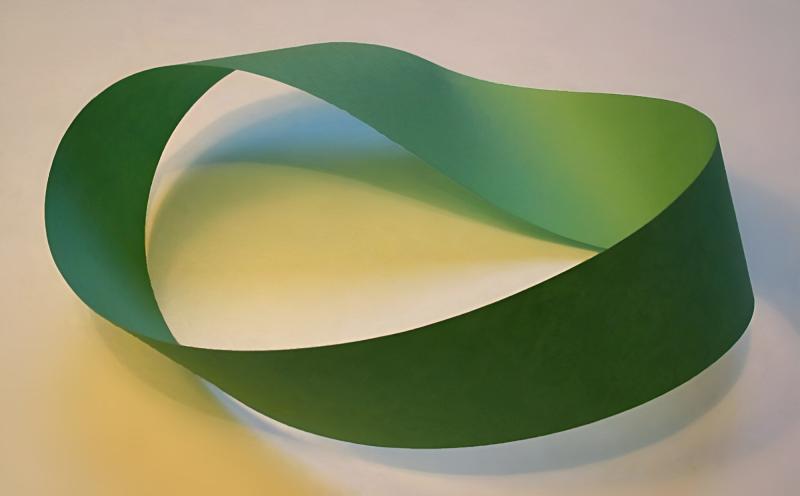
Some mathematical structures are, I believe, hidden plans for the art, architecture, music and stories that humanity has created. Some of them are geometric, such as the circle or the Möbius strip, and can easily be understood as providing a model for how to make things. Others are numerical, such as prime numbers or Fibonacci numbers, which act like a code for building the world. But there are more conceptual structures, such as the ideas of randomness or symmetry, which are framing the way we think.
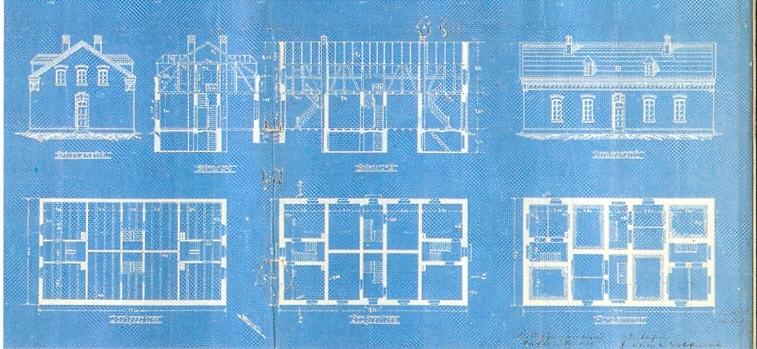
The idea of a blueprint was first introduced by the nineteenth-century polymath John Herschel into engineering and the construction industry. They acted like a negative of the original drawings with white lines mapping out the design on a blue background. The blueprint was a plan of the skeleton structure, which would then be used to create the physical object. The blue came from the photosensitive ferric compound that Herschel used. The idea here is that mathematical structures act as blueprints inspiring a whole range of different artistic constructions. The mathematics provides the plan or framework. The artist provides the flesh that realises the structure in the medium of their choice: words, paint, music or building materials.
One of the striking revelations is that it is not only human creation and innovation that taps into these mathematical blueprints. Nature too is exploiting these structures to achieve the wonders that the Universe contains. It’s as if human creativity and mathematical discovery are two languages with which to navigate and understand the physical Universe we live in. The fact that we see these mathematical blueprints at work everywhere is powerful evidence for my belief that we live in a physicalised piece of mathematics.
Pieces of art have a moment in time when they emerge. That moment in history is integral to the work that transpires. The dynamism of the Baroque grows out of a society navigating a world in flux. The absurdity of Dada reflects the breakdown in political structures that led to war at the beginning of the twentieth century. The Universe too seems to have had a beginning, which we can date to 14 billion years ago. The things we have discovered in this Universe similarly have their own moment of creation: the first stars, the first cells, the first humans. Mathematics I believe has a different quality. I am a strong believer in the idea that the mathematical structures that underpin both art and nature are timeless. That they do not need a moment of creation. They exist outside time and space. The Universe we live in is a physicalisation of these abstract structures.
There will be a moment when the human mathematician will see and articulate that structure for the first time in an act that often feels like a feat of creativity, but that moment is always mixed with a sense that this was a structure waiting there to be discovered, whose existence is independent of human involvement. Mathematicians are revealing the pure abstract structures that are the true origin of the things being projected onto the wall of Plato’s cave. The Universe we see around is simply a physical manifestation of those abstract forms. And within that Universe artists are creating their own works which reinterpret these structures once again.
Artists often talk about this tension between creativity and discovery too. The statue was hidden inside the stone waiting for the sculptor to release it. This sequence of chords was waiting to be heard for the first time. I’ve talked to composers who admit to musical structures being discovered simultaneously by different musicians, much like the three nineteenth-century geometers who simultaneously discovered non-Euclidean geometry.
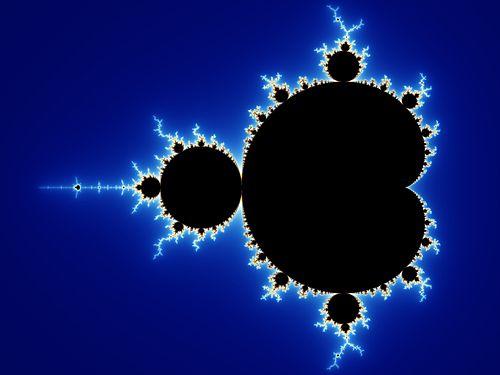
Although both mathematics and art might be uncovering the universal structures of the Platonic realm, Plato himself was in fact quite dismissive of art, believing it to be a poor copy of a poor copy. Mathematics was the real thing. Nature an approximation of the maths. And art a further degradation of the primary abstract structures from which it all evolved. Plato has a point when it comes to nature failing in its attempt to physicalise these mathematical blueprints. We know the definition of a circle or a fractal or a prime number. And yet every attempt to identify a circle in the physical Universe turns out to be a poor approximation of a true circle. At the atomic level, we see the pixelation that destroys the perfect nature of the circle’s structure. The same for a fractal, where eventually we can no longer physically zoom in any closer without exposing the quantum pixelated nature of reality, while the mathematics carries on revealing ever smaller images of complexity. Prime numbers are infinite in nature and yet our finite Universe can only ever represent an infinitely small proportion of these fundamental numbers.
Although Plato is right when it comes to nature’s failure to match the perfection of mathematics, perhaps he is being too harsh when it comes to his view of the artist. In some ways, the artistic representations of these blueprints are succeeding at realising these structures where nature inevitably must fail. Although I am a Platonist at heart, the spirit is to treat maths, art and nature as equal partners in our
equilateral triangle of ideas.
Many of the creative artists that we will encounter are quite unaware of the mathematical structures that underpin their work. It is as if their aesthetic sensibilities and desire to experiment with form leads them to rediscover – and sometimes even to arrive first at – these mathematical blueprints. They might be heralded as artists but I want to honour them as secret mathematicians. I believe we all have a
bit of the secret mathematician in us, even if we outwardly might shun the subject. For those readers with a nervous mathematical disposition, I want to surprise you with the revelation that the things you love are often pieces of mathematics in disguise.
If mathematics acts as a powerful set of blueprints for human creativity, I also believe that an artistic mindset is an important blueprint for discovering new mathematics. This is a two-way dialogue, where
mathematics and human artistic creativity are fuelling each other to reach ever greater heights. If artists are secret mathematicians, then equally mathematicians are secret artists. The mathematics itself might
have an existence outside time, but it needs mathematicians to help the rest of humanity see these structures for the first time. The creation of mathematical structures is, I believe, driven by aesthetic sensibilities that resonate with the soul of the artist.
It’s often forgotten, or never realised, that mathematics is a human activity, created by humans for humans, so it’s designed to appeal to what makes us human. That is why it shares so much in common with the act of creating art. But what is often at the core of both of these activities is our relationship to the physical world around us. Both are creating ways to interpret, understand, navigate our place in the
Universe. And so it is entirely natural that mathematicians and artists should be excited, moved, intrigued, curious about the same fundamental structures.
Marcus talked about this topic at the Isaac Newton Institute For Mathematical Sciences as part of the Cambridge Festival on March 28, 2026. Here is a recording of the talk.
About this article
This article is an excerpt from Marcus du Sautoy's forthcoming book Blueprints: How Mathematics Shapes Creativity, released on the 7th May 2026. Blueprints asks us to consider that mathematics and art may not be polar opposites after all. Their complementary relationship spans a vast historical and geographic landscape, from the earliest stone circles to Mozart’s obsession with numbers and the radically modern architecture of Zaha Hadid. Whether we are searching for meaning in an abstract painting or finding patterns in poetry, there are blueprints everywhere: symmetry, prime numbers, the golden ratio and more. In this bold and philosophical exploration of human creativity, Marcus du Sautoy unpacks how we make art, why a creative mindset is vital for discovering new mathematics, and how a fundamental connection to the natural world intrinsically links these two subjects.
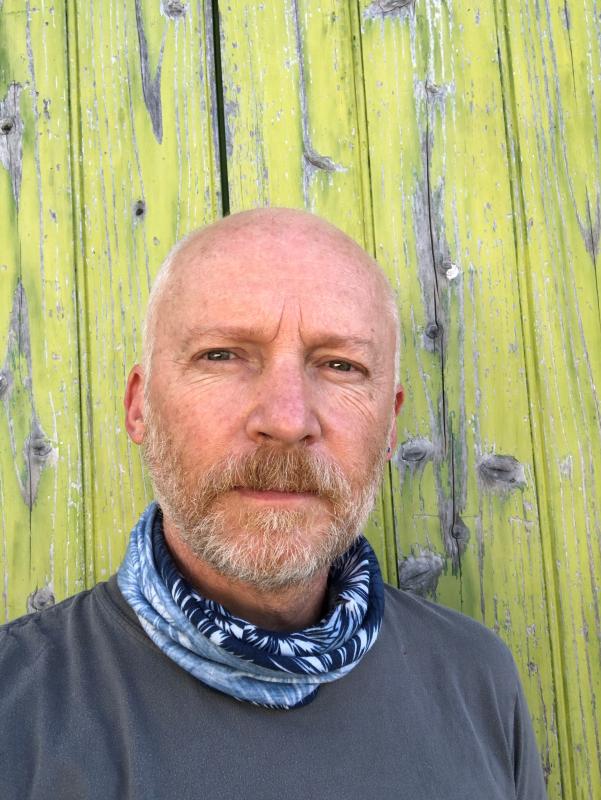
Marcus du Sautoy is Professor of Mathematics at the University of Oxford and a fellow of the Royal Society. In 2008 he was appointed to the university’s prestigious professorship as the Simonyi Chair for the Public Understanding of Science, a post previously held by Richard Dawkins. He has presented numerous radio and TV programmes, including a four-part landmark TV series for the BBC called The Story of Maths. He works extensively with a range of arts organisations bringing science alive for the public, from the Royal Opera House to the Glastonbury Festival and from Complicite theatre company to the Serpentine Gallery.
This article was produced as part of our collaboration with the Isaac Newton Institute for Mathematical Sciences (INI) – you can find all the content from the collaboration here.
The INI is an international research centre and our neighbour here on the University of Cambridge's maths campus. It attracts leading mathematical scientists from all over the world, and is open to all. Visit www.newton.ac.uk to find out more.
