

Home
plus.maths.org

Secondary menu

  • My list
  • About Plus
  • Sponsors
  • Subscribe
  • Contact Us
  • Log in
  • Main navigation

  • Home
  • Articles
  • Collections
  • Podcasts
  • Maths in a minute
  • Puzzles
  • Videos
  • Topics and tags
  • For

    • cat icon
      Curiosity
    • newspaper icon
      Media
    • graduation icon
      Education
    • briefcase icon
      Policy

    Popular topics and tags

    Shapes

    • Geometry
    • Vectors and matrices
    • Topology
    • Networks and graph theory
    • Fractals

    Numbers

    • Number theory
    • Arithmetic
    • Prime numbers
    • Fermat's last theorem
    • Cryptography

    Computing and information

    • Quantum computing
    • Complexity
    • Information theory
    • Artificial intelligence and machine learning
    • Algorithm

    Data and probability

    • Statistics
    • Probability and uncertainty
    • Randomness

    Abstract structures

    • Symmetry
    • Algebra and group theory
    • Vectors and matrices

    Physics

    • Fluid dynamics
    • Quantum physics
    • General relativity, gravity and black holes
    • Entropy and thermodynamics
    • String theory and quantum gravity

    Arts, humanities and sport

    • History and philosophy of mathematics
    • Art and Music
    • Language
    • Sport

    Logic, proof and strategy

    • Logic
    • Proof
    • Game theory

    Calculus and analysis

    • Differential equations
    • Calculus

    Towards applications

    • Mathematical modelling
    • Dynamical systems and Chaos

    Applications

    • Medicine and health
    • Epidemiology
    • Biology
    • Economics and finance
    • Engineering and architecture
    • Weather forecasting
    • Climate change

    Understanding of mathematics

    • Public understanding of mathematics
    • Education

    Get your maths quickly

    • Maths in a minute

    Main menu

  • Home
  • Articles
  • Collections
  • Podcasts
  • Maths in a minute
  • Puzzles
  • Videos
  • Topics and tags
  • Audiences

    • cat icon
      Curiosity
    • newspaper icon
      Media
    • graduation icon
      Education
    • briefcase icon
      Policy

    Secondary menu

  • My list
  • About Plus
  • Sponsors
  • Subscribe
  • Contact Us
  • Log in
  • icon

    Maths in a minute: Partition functions

    24 June, 2024
    2 comments

    Brief summary

    The partition function is a way of calculating the number of ways you can write a natural number as a sum of smaller numbers, without explicitly writing out all the different sums.

    You can write any natural number as a sum of natural numbers. For example 3 can be written as a sum in three different ways:

    3=3
    3=2+1
    3=1+1+1

    The number 4 can be written as a sum in five different ways:

    4=4
    4=3+1
    4=2+2
    4=2+1+1
    4=1+1+1+1

    The partition number P(n) of a number n is precisely the number of ways it can be written as a sum of natural numbers (without worrying about the order in which they are added). As we have just seen, P(3)=3 and P(4)=5.
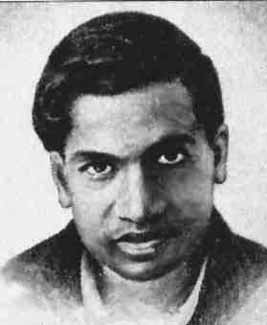
    Ramanujan

    Srinivasa Ramanujan (1887 - 1920).

    Srinivasa Ramanujan was a self-taught mathematical genius whose impact on mathematics was huge.

    Writing down and counting the number of ways you can write a number as a sum seems easy, but in fact it quickly gets out of hand as the number gets large. For example for the number 10, the partition number P(10) is 42, which is already surprisingly large. A partition function is a way of calculating the partition number as a function of n without explicitly writing out all the different ways of writing n as a sum. The brilliant self-taught mathematician Srinivasa Ramanujan was elected a fellow of the Royal Society in 1918 for his work with G.H. Hardy on such a partition function. (Find out more in Celebrating Ramanujan.)

    In physics, partition functions arise when you study physical systems, say a room filled with gas at a certain temperature. Partition functions here provide a way to measure the entropy – the amount of order, or equivalently disorder – in such a system. Again this amounts to a counting problem, this time counting how many different possible arrangements of the molecules of gas in the room result in the same temperature. (You can read about more in our article Entropy: from fridge magnets to black holes.)

    Partition functions in both physics and mathematics serve the same purpose: they provide a way of organising a collection of things. In mathematics it is a way of calculating how many possible ways there are of writing a number as a sum. In physics it is calculating how many possible microscopic arrangements of a physical system can result in the same macroscopic state.


    This article was produced as part of our collaboration with the Isaac Newton Institute for Mathematical Sciences (INI). The INI is an international research centre and our neighbour here on the University of Cambridge's maths campus. The Newton Gateway is the impact initiative of the INI, which engages with users of mathematics. You can find all the content from the collaboration here.

    INI logo


    • Log in or register to post comments

    Comments

    Nigel Buttimore

    27 August 2024

    Permalink

    Should the above replace "suers of mathematics" in the partition item?

    • Log in or register to post comments

    Rachel

    9 October 2024

    In reply to users of mathematics by Nigel Buttimore

    Permalink

    Thanks for spotting that typo!

    • Log in or register to post comments

    Read more about...

    INI
    partitions
    Maths in a minute

    Our Podcast: Maths on the Move

    Our Maths on the Move podcast brings you the latest news from the world of maths, plus interviews and discussions with leading mathematicians and scientists about the maths that is changing our lives.

    Apple Podcasts
    Spotify
    Podbean

    Plus delivered to you

    Keep up to date with Plus by subscribing to our newsletter or following Plus on X or Bluesky.

    University of Cambridge logo

    Plus is part of the family of activities in the Millennium Mathematics Project.
    Copyright © 1997 - 2025. University of Cambridge. All rights reserved.

    Terms