

Do you know what's good for you - what's the best medicine?
How do you judge the risks and benefits of new medical treatments, or of lifestyle choices? With a finite health care budget, how do you decide which treatments should be made freely available on the NHS? Historically, decisions like these have been made on the basis of doctors' individual experiences with how these treatments perform, but over recent decades the approach to answering these questions has become increasingly rational. Statistics and maths are used not just to test new treatments, but also to measure such fuzzy terms as quality of life, and to figure out which treatments provide most "health for money".
While the decisions of health authorities affect all our lives, the underlying calculations are rarely discussed in the media. The articles listed below, together with the podcasts, explore how these difficult decisions are made, and point to some of the pitfalls. If you're a teacher, you might want to explore the role of maths in evidence-based medicine using our classroom activity, which accompanies the articles. And if you're a student thinking about your future career, have a look at our career interview with a medical statistician.
This package is part of a series on the role of maths and stats in the biomedical sciences, produced with generous support from the Wellcome Trust.
Articles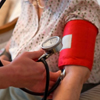 Evaluating a medical treatment - how do you know it works?New treatments and drugs are tested extensively before they come on the market. But how do you make sure that no dangerous side effects are missed in the trials, and that any positive effect you observe is really due to the drug, rather than just chance or some other type of bias that has crept in? (This article is accompanied by a podcast.)
Read more...  The economics of healthWith a finite health care budget, health authorities have to strike a difficult balance: every decision to fund a treatment for one patient group may come at the expense of others. So how are these difficult decisions made? Read more...  How to measure lifeThis news item from June 2009 examines the National Institute of Clinical Excellence's use of health economics to decide whether or not to fund the cancer drug revlimid. Read more...  Breast screening, a statistical controversyOne in nine women will get breast cancer in her lifetime, and it seems sensible to screen women for breast cancer to treat them as early as possible. But, as this article explains, the statistical evidence isn't all that clear-cut. Read more...  2845 ways of spinning riskDo bacon sandwiches give you cancer? Statistical analysis can give you an idea of whether they do or not, but, as this article explains, public reaction to the results depends on how the risks are spun by the media. Read more...  Understanding uncertainty: small but lethalComparing and communicating small lethal risks is a tricky business, yet this is what many of us are faced with in our daily lives. One way of measuring these risks is to use a quantity called the micromort. Read more... 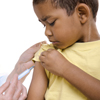 Protecting the nationVaccination is an emotive business. The furore around the MMR vaccine and autism has shown that vaccination health scares can cause considerable damage: stop vaccinating, and epidemics are sure to follow. But how do scientists decide whether a vaccine and a vaccination strategy are effective and safe? (This article is accompanied by a podcast.) Read more...  Florence Nightingale: The compassionate statisticianFlorence Nightingale survives in our imaginations as an inspired nurse, but the "lady with the lamp" was also a pioneering and passionate statistician. She understood the influential role of statistics and used them to support her convictions. Read more... |
Podcasts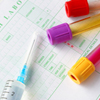 Evaluating a medical treatment: The podcastWe talk to David Spiegelhalter (Winton Professor of the Public Understanding of Risk), Sheila Bird (Professor at the Medical Research Council Biostatistics Unit), and Nigel Hawkes (journalist and director of Straight Statistics) about why randomised controlled trials are used and how they test if a new treatment works. Hear more...  Biostatistics: From cradle to graveIt's not just medical drugs that need rigorous testing. Public health programmes, too, need to be assessed before they are implemented, and government health policy should also be based on objective evidence. We talk to Professor Sheila Bird of the Biostatistics Unit in Cambridge about her work in public health and its impact on policy, and discuss bias in pharmaceutical studies. Hear more... Protecting the nation: The podcastWe talk to Paddy Farrington, Professor of Statistics at the Open University, about issues surrounding vaccination safety. Hear more... |
Activity Classroom activity: What's the best medicineThis activity explores the difficult decisions facing health authorities when deciding which drugs should be funded, and explores how maths is used to decide which treatments provide the most "health for money". It involves basic arithmetic and manipulation of averages. |
|
Career interview Career interview: medical statisticianMedical statistician Robert Hemmings explains how his work for the Medicines Control Agency helps to safeguard the health of the nation. Read more... |