Home
plus.maths.org

Secondary menu

  • My list
  • About Plus
  • Sponsors
  • Subscribe
  • Contact Us
  • Log in
  • Main navigation

  • Home
  • Articles
  • Collections
  • Podcasts
  • Maths in a minute
  • Puzzles
  • Videos
  • Topics and tags
  • For

    • cat icon
      Curiosity
    • newspaper icon
      Media
    • graduation icon
      Education
    • briefcase icon
      Policy

    Popular topics and tags

    Shapes

    • Geometry
    • Vectors and matrices
    • Topology
    • Networks and graph theory
    • Fractals

    Numbers

    • Number theory
    • Arithmetic
    • Prime numbers
    • Fermat's last theorem
    • Cryptography

    Computing and information

    • Quantum computing
    • Complexity
    • Information theory
    • Artificial intelligence and machine learning
    • Algorithm

    Data and probability

    • Statistics
    • Probability and uncertainty
    • Randomness

    Abstract structures

    • Symmetry
    • Algebra and group theory
    • Vectors and matrices

    Physics

    • Fluid dynamics
    • Quantum physics
    • General relativity, gravity and black holes
    • Entropy and thermodynamics
    • String theory and quantum gravity

    Arts, humanities and sport

    • History and philosophy of mathematics
    • Art and Music
    • Language
    • Sport

    Logic, proof and strategy

    • Logic
    • Proof
    • Game theory

    Calculus and analysis

    • Differential equations
    • Calculus

    Towards applications

    • Mathematical modelling
    • Dynamical systems and Chaos

    Applications

    • Medicine and health
    • Epidemiology
    • Biology
    • Economics and finance
    • Engineering and architecture
    • Weather forecasting
    • Climate change

    Understanding of mathematics

    • Public understanding of mathematics
    • Education

    Get your maths quickly

    • Maths in a minute

    Main menu

  • Home
  • Articles
  • Collections
  • Podcasts
  • Maths in a minute
  • Puzzles
  • Videos
  • Topics and tags
  • Audiences

    • cat icon
      Curiosity
    • newspaper icon
      Media
    • graduation icon
      Education
    • briefcase icon
      Policy

    Secondary menu

  • My list
  • About Plus
  • Sponsors
  • Subscribe
  • Contact Us
  • Log in
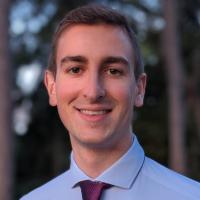
  • Georg Maierhofer

    How physics can help AI learn about the real world

    9 April, 2024

    It's always exciting to have a glimpse at new mathematics and technology as they take shape.  In this podcast we talk to Georg Maierhofer, from the University of Cambridge, about an exciting new idea that is only just emerging  – physics informed neural networks  (PINNs for short) – where you add in the laws of physics to machine learning methods.  We have been able to sit in on a number of meetings of our colleagues from Maths4DL (the Mathematics for Deep Learning research group) as they explore this idea.   Georg explains why PINNs are a bit like learning golf, tells us the exciting opportunities and challenges, and why the key part to developing new ideas is getting the right people together at the right time.

    You can find more about the machine learning and the some of the work that Maths4DL is doing here, including our recent podcast How does AI work?  and our collection Predicting the weather with artificial intelligence.


    This content is part of our collaboration with the Mathematics for Deep Learning (Maths4DL) research programme, which brings together researchers from the universities of Bath and Cambridge, and University College London. Maths4DL aims to combine theory, modelling, data and computation to unlock the next generation of deep learning. You can see more content produced with Maths4DL here.

    Maths4DL logo
    • Log in or register to post comments
    You can listen to the podcast using the player above, and you can listen and subscribe to our podcast through Apple Podcasts, Spotify and through most other podcast providers via podbean.

    Read more about...

    maths4DL
    machine learning
    artificial intelligence
    differential equation
    weather forecasting
    deep learning
    University of Cambridge
    University of Cambridge logo

    Plus is part of the family of activities in the Millennium Mathematics Project.
    Copyright © 1997 - 2025. University of Cambridge. All rights reserved.

    Terms