
Home
plus.maths.org

Secondary menu

  • My list
  • About Plus
  • Sponsors
  • Subscribe
  • Contact Us
  • Log in
  • Main navigation

  • Home
  • Articles
  • Collections
  • Podcasts
  • Maths in a minute
  • Puzzles
  • Videos
  • Topics and tags
  • For

    • cat icon
      Curiosity
    • newspaper icon
      Media
    • graduation icon
      Education
    • briefcase icon
      Policy

    Popular topics and tags

    Shapes

    • Geometry
    • Vectors and matrices
    • Topology
    • Networks and graph theory
    • Fractals

    Numbers

    • Number theory
    • Arithmetic
    • Prime numbers
    • Fermat's last theorem
    • Cryptography

    Computing and information

    • Quantum computing
    • Complexity
    • Information theory
    • Artificial intelligence and machine learning
    • Algorithm

    Data and probability

    • Statistics
    • Probability and uncertainty
    • Randomness

    Abstract structures

    • Symmetry
    • Algebra and group theory
    • Vectors and matrices

    Physics

    • Fluid dynamics
    • Quantum physics
    • General relativity, gravity and black holes
    • Entropy and thermodynamics
    • String theory and quantum gravity

    Arts, humanities and sport

    • History and philosophy of mathematics
    • Art and Music
    • Language
    • Sport

    Logic, proof and strategy

    • Logic
    • Proof
    • Game theory

    Calculus and analysis

    • Differential equations
    • Calculus

    Towards applications

    • Mathematical modelling
    • Dynamical systems and Chaos

    Applications

    • Medicine and health
    • Epidemiology
    • Biology
    • Economics and finance
    • Engineering and architecture
    • Weather forecasting
    • Climate change

    Understanding of mathematics

    • Public understanding of mathematics
    • Education

    Get your maths quickly

    • Maths in a minute

    Main menu

  • Home
  • Articles
  • Collections
  • Podcasts
  • Maths in a minute
  • Puzzles
  • Videos
  • Topics and tags
  • Audiences

    • cat icon
      Curiosity
    • newspaper icon
      Media
    • graduation icon
      Education
    • briefcase icon
      Policy

    Secondary menu

  • My list
  • About Plus
  • Sponsors
  • Subscribe
  • Contact Us
  • Log in
  • Kevin Buzzard and Big Proof

    27 October, 2025

    There's been a lot of talk recently about whether artificial intelligence is becoming just as good as maths as humans are. But quietly in the background there's been another development regarding the use of computers in maths. It involves proof assistants: computer programmes that can check whether a mathematical proof is correct; whether it can be derived from a set of basic axioms of mathematics using only the rules of logic.

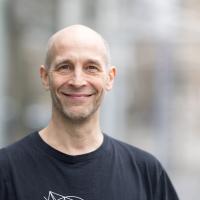
    In this episode of Living proof we meet Kevin Buzzard, an expert on proof assistants at University College London. Kevin explains what proof assistants are, how using them is like playing a computer game, and why they turn maths into a highly collaborative pursuit. He also tells us about his effort to get a proof assistant to check one of the most famous results in all of mathematics — Fermat's Last Theorem — and how proof assistants and AI may team up to provide a powerful tool.

    We met Kevin in the summer when he was taking part in a research programme called Big Proof at the Isaac Newton Institute for Mathematical Sciences (INI) in Cambridge. This programme, which attracted some of the best minds in modern mathematics, followed on from a pioneering workshop on the same topic which took place at the INI in 2017.

    To find out more about the topics mentioned in this podcast, see the following articles:

    • Proof assistants — This two part article, written by our brilliant summer intern Ben Watkins, is based on the interview with Kevin Buzzard and explores what proof assistants are.
    • Maths in a Minute: Coding with Lean — Here's a simple walk-through of how to use a proof assitant called Lean.
    • Pure maths in crisis? — In this article from 2019 Kevin Buzzard explains why he thinks that the standard of proof in research maths might not be as high as mathematicians would like to believe.
    • How to (im)prove mathematics — This article explores how the simple notion of counting ends in a revolutionary new way of doing maths using proof assistants. This article is based on a talk by Terence Tao at a 2024 workshop at the INI which celebrated the mathematics of Tim Gowers as well as his 60th birthday.
    • A very old problem turns 30! — This article explores Fermat's famous last theorem as well as the mathematics its proof has given rise to. It comes with a podcast featuring Andrew Wiles, who proved the result, and people who are now working on its legacy.
    • You can find more background reading in our collection on proof assistants.

    This content forms part of our collaboration with the Isaac Newton Institute for Mathematical Sciences (INI) – you can find all the content from the collaboration here.

    The INI is an international research centre and our neighbour here on the University of Cambridge's maths campus. It attracts leading mathematical scientists from all over the world, and is open to all. Visit www.newton.ac.uk to find out more.

    INI logo
    • Log in or register to post comments
    You can listen to the podcast using the player above, and you can listen and subscribe to our podcast through Apple Podcasts, Spotify and through most other podcast providers via podbean.

    You might also like

    package
    Robot being taught maths

    Proof assistants

    article

    A very old problem turns 30!

    Andrew Wiles's proof of Fermat's Last Theorem solved a centuries-old problem by opening a door onto the future of mathematics.
    news

    Pure maths in crisis?

    Proof is the essence of mathematics. But is the standard of proof in research maths really as high as mathematicians would like to believe?

    Read more about...

    INI
    proof
    Fermat's Last Theorem
    University of Cambridge logo

    Plus is part of the family of activities in the Millennium Mathematics Project.
    Copyright © 1997 - 2025. University of Cambridge. All rights reserved.

    Terms