

Teacher package: Prime numbers
The Plus teacher packages are designed to give teachers (and students) easy access to Plus content on a particular subject area. Most Plus articles go far beyond the explicit maths taught at school, while still being accessible to someone doing A level maths. They put classroom maths in context by explaining the bigger picture — they explore applications in the real world, find maths in unusual places, and delve into mathematical history and philosophy. We therefore hope that our teacher packages provide an ideal resource for students working on projects and teachers wanting to offer their students a deeper insight into the world of maths.
Prime numbers
This teacher package brings together all Plus articles on prime numbers. In addition to the Plus articles, the try it yourself section provides links to related problems on our sister site NRICH.
We've grouped the articles into four categories:
- Hunting primes — We've known since ancient times that there are infinitely many primes, but how do you find them all? This category looks at prime number algorithms and new discoveries of largest primes;
- Prime mysteries — Prime numbers are at the centre of some of the most intriguing open problems in mathematics. This category has articles explaining these problems and reporting on recent breakthroughs;
- Towards the Riemann hypothesis — The Riemann hypothesis is the star among open problems involving primes, and therefore gets its own category. The articles here explore its motivation, and explain the hypothesis itself;
- Prime applications — So primes are fun, but are they useful? This category explores applications of primes.
We also present a list of relevant problems from our sister site NRICH.
But before we get started, have a look at Marcus du Sautoy's collection of curious prime facts, centred around football: Beckham in his prime number.
Hunting primes
Catching primes — Primes are often caught in sieves, that of Eratosthenes being the most famous one. This article introduces an algorithm for finding primes that makes the sieve appear literally before your eyes.
Prime time — A report on a new algorithm for finding primes which stunned mathematicians.

New largest prime discovered! — GIMPS is a distributed computing project dedicated to finding ever larger primes. Everyone with a PC and an internet connection can take part, and a big cash prize awaits those whose computer finds the first prime with more than ten million digits. The news stories New largest prime discovered!, Volunteers discover new largest prime, and Volunteers find largest prime number yet — again! report on the last three GIMPS discoveries.
Prime mysteries
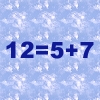
Mathematical mysteries: the Goldbach conjecture — A brief introduction to the Goldbach conjecture. It states that every even number can be written as the sum of two primes, but, despite its simplicity, it has not yet been proved.
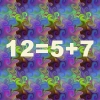
Mathematical mysteries: Goldbach revisited — The article above was so popular that we decided to write another one, looking at Goldbach in more detail and presenting another, very similar, mystery.

Gold for Goldbach — How to get rich with the Goldbach conjecture.
Mind the gap — This article reports on progress in proving the twin prime conjecture, which says that there are infinitely many pairs of primes whose difference is two. Simple to state, but fiendishly hard to prove.

Elusive twins — A follow-on from the article above: the breakthrough turned out to contain a flaw!

The Fields medal 2006 — One of the 2006 Fields medals went to a pair of mathematicians who proved a remarkable result related to the twin prime conjecture.
Towards the Riemann hypothesis

The prime number lottery — The first of a two part exploration of the Riemann Hypothesis by Marcus du Sautoy. We find out how the German mathematician Gauss, aged only 15, discovered the dice that Nature used to chose the primes.

The music of the primes — The second part of Marcus du Sautoy's series on the Riemann Hypothesis, taking its cue from music.

A whirlpool of numbers — An exploration of the patterns that can be found in numbers, culminating in an explanation of the Riemann hypothesis.

One L of a discovery — The Riemann zeta function, which lies at the heart of the Riemann hypothesis, is the grand-daddy of a whole other class of functions. This article explains what they are and what they have to do with astrophysics.
Prime applications

Safety in numbers — This interview with Simon Singh explores the use of primes in cryptography.

How maths can make you rich and famous — This article contains another introduction to the use of prime numbers in cryptography, and leads on to the complexity of code-cracking algorithms.
Try it yourself with our sister site NRICH
Here is a selection of problems from our sister site NRICH.
Why 24? — Take any prime number greater than 3, square it, subtract one and divide by 24 — what happens?
Prime squares — Every prime number except 2, that is every odd prime number, is the difference of two squares. Prove that there is only one way to express an odd prime number as the difference of two squares.
Introductory number theory — This article contains a proof of the fundamental theorem of arithmetic.

Public key cryptography — An introduction to codes based on the multiplication of large primes. There also is a chance to crack a code yourself.

The knapsack problem — Another problem involving public key cryptography.
Anonymous
Check out the "Croft Spiral Sieve" at: http://www.primes demystified.com