
Dark stars
Brief summary
Theoretical physicists are investigating whether hypothetical boson stars, or similar objects, could be masquerading as black holes. Gravitational waves play an important role in this research.
"Ladies and gentlemen, we have detected gravitational waves!" This announcement by David Reitze almost exactly ten years ago was greeted by cheers and applause across the globe. Reitze, the executive director of the Laser Interferometer Gravitational-wave Observatory (LIGO), said that on September 14, 2015, the observatory had finally detected ripples in the fabric of spacetime that were predicted by Albert Einstein all the way back in 1916. The ripples were caused by two black holes colliding over 1 billion lightyears away.
Ten years on and gravitational waves have provided a wealth of information about the objects that can cause them, especially black holes. But research in the area is far from finished. Indeed, physicists at the University of Cambridge have recently added to a body of work which suggests that not everything that looks like a black hole really is a black hole — and which also promises to help resolve the mystery of dark matter.
What are gravitational waves?
As their name suggests, gravitational waves are connected to the force of gravity. In 1687 Isaac Newton formulated his universal law of gravitation, which describes the gravitational attraction between two massive objects. The law remained unchallenged until 1905, when Einstein published his special theory of relativity. The theory says that there is a universal speed limit in the Universe: nothing can travel faster than light, that is, faster than roughly 300,000 km per second. This contradicted Newton, who thought the effect of gravity was instantaneous: take away the Sun, and the effect would be felt on Earth immediately.
Einstein himself later remedied this problem by proposing that gravity isn't a force that wafts across the ether in some mysterious way, but a result of the curvature of space. An analogy that is often given is that of a bowling ball sitting on a trampoline. The ball creates a dip in the trampoline, curving its surface, so a marble placed nearby will roll into the dip towards the ball. According to Einstein, massive bodies warp spacetime in a similar way, causing lighter bodies to be attracted to them (find out more here).
One of the consequences of Einstein's general theory of relativity was that when a lot of mass is concentrated in a small region of space, its motion could, in theory, create ripples that can be felt across space and time. These ripples became known as gravitational waves.
"Einstein realised very quickly after he discovered his theory that these waves are solutions to his equations," explains Ulrich Sperhake, Professor of Theoretical Physics and member of the Stephen Hawking Centre for Theoretical Cosmology at DAMTP. "That started a debate which lasted almost half a century. It was only in the late 1950s and early 1960s that people realised that these waves are not only a mathematical feature of Einstein's theory, but a genuine physical phenomenon. This sparked the first efforts to try and detect gravitational waves."
What was clear from the outset was that gravitational waves would be extremely weak. "When a gravitational wave passes through you, you feel nothing," says Sperhake. Over the decades extremely sophisticated measuring instruments were developed to detect gravitational waves. Then finally, on September 14, 2015, the Laser Interferometer Gravitational-wave Observatory (LIGO) recorded a detection. The wave in question was deemed to have come from the collision of two black holes over 1 billion lightyears away. The revolutionary discovery was officially announced in February 2016.
All gravitational wave signals that have been detected since are thought to have come either from pairs of black holes, or other compact objects called neutron stars (such pairs are called binaries). "Because these objects are small, they can get really close to each other without actually colliding," says Seppe Staelens, a graduate student of Sperhake. "It's when they go through this violent dancing motion that they emit gravitational waves. The waves get stronger and stronger until there's a cataclysmic collision, which typically results in a new black hole. That's when the gravitational waves die out rapidly."
Physicists know this, not because they observe the binary systems directly. Instead, they use Einstein's theory to calculate what type of objects could have emitted the signal they have seen (using such calculations they can create computer simulations such as the one below.
"Gravitational wave signals are like fingerprints," says Sperhake. "You and I have similar fingerprints, but they are not the same. Similarly, subtle differences allow us to tell from an observed gravitational wave the properties of the black holes, or neutron stars, that emitted it."
When you have a hammer…
Because gravitational waves carry the imprint of the objects that caused them, they have given us a new tool for observing the Universe. And in the ten years since the first detection we have learnt a lot. Gravitational waves have given us the first observational evidence for the existence of black hole binaries, for example, and they have helped to survey the population of black holes that are out there.
But at the same time, physicists have been caught in a kind of trap. When they identify an object or event on the basis of its gravitational wave fingerprint, it's like the police matching a fingerprint found at a crime scene to one found in the police database. The database of gravitational wave fingerprints is constructed theoretically — given a hypothetical black hole or neutron star binary with certain properties, physicists calculate what its fingerprint would look like.
However, the person who left their fingerprint at the crime scene might not be on police record, so a close match in the police database would point to the wrong culprit. Similarly, a close match in the gravitational wave database would only ever point to a black hole or neutron star merger, when in reality the fingerprint might have come from something entirely different. The true culprit would never be discovered. When you have a hammer everything looks like a nail.
For this reason physicists, including Sperhake and his colleagues, have sought to extend their database of fingerprints. To do this they reached for made-up objects we don't know really exist : boson stars.
Inventing stars
"All the planets and stars we know of, including our own, are made of a class of particles called fermions," says Sperhake. Fermions include familiar particles such as electrons and protons. But there is also another class of particles called bosons. These include photons and the famous Higgs boson.
"In the mid 1950s the physicist John Wheeler thought, 'we have stars made out of fermions, so why can't we have stars made out of bosons?'," says Sperhake. "Wheeler tried to calculate whether you can make a star out of photons, but this didn't work. Photons are too wild, they are reluctant to form stable, long-lived equilibrium models. But around ten years later people said, 'ok, we don't know any good bosons to form stars from but we can make them up. Mathematically we know how to handle such hypothetical particles'."
An example of a hypothetical boson is a particle called the axion. Boson stars are imagined to be formed of particles very similar to axions. It's assumed that these particles don't interact with light so even if boson stars do exist, we won't be able to see them. This in turn means that boson stars are a candidate for the so-called dark matter which we know pervades the Universe — we can observe its gravitational pull — but which physicists haven't as yet been able to identify. This in itself makes boson stars an exciting proposition.
Mimicking black holes
The fact that they are dark also means that boson stars can masquerade as black holes. While we can't directly see black holes, the gravitational pull they exert pulls light into an orbit around them, forming a light ring. Properties of the latter dictate how hot plasma around black holes would be seen by telescopes here on Earth .
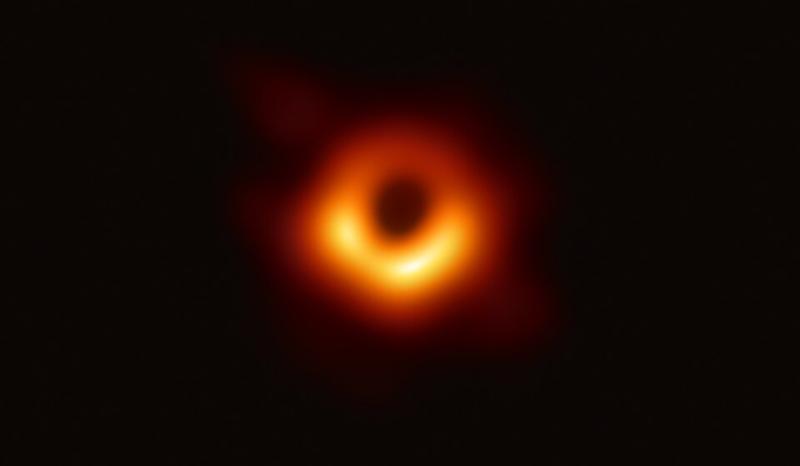

Physicists' mathematical grip on boson stars has allowed them to calculate that certain types of them would also have a light ring — and this would at first sight look like that of a black hole. "Most of the observational evidence we have for black holes is related to the light ring. So anything that has a light ring could be mistakenly identified as a black hole," says Sperhake.
This gives boson stars an extra edge. While the existence of black holes is generally accepted, they still come with theoretical issues that make some physicists uncomfortable. The fact that they contain a singularity at their centre where the density of matter becomes infinite, for example, and the fact that no one knows what happens to the information they swallow up (according to the laws of physics, this information should be preserved). The idea that something that looks like a black hole may not actually be one, is an exciting avenue to explore.
Fleeting stars?
An interesting question, then, is whether hypothetical binaries of boson stars could also emit gravitational waves which resemble those from black holes. In a 2024 paper Sperhake, together with former graduate student Tamara Evstafyeva, Isobel M. Romero-Shaw, and Michalis Agathos, showed that the answer is yes. The fingerprints such binaries would leave in their gravitational wave signal would look very similar to that of black hole binaries, confirming boson stars' role as black hole mimickers. (Find out more in this article.)
In their most recent work Gareth Arturo Marks (also a graduate student at DAMTP), Staelens, Evstafyeva, and Sperhake eliminated a worrying theoretical obstruction to the existence of boson stars. "Over the past five to ten years arguments have been put forward as to why objects that look like black holes, such as boson stars, might be physically unrealistic," says Staelens.
"The idea was that if you were to give such objects a tiny flick, then, under certain conditions, they would collapse into a black hole. If that were true, then there would be no point in thinking about black-hole mimickers because they would have no chance of existing. But our paper shows that, at least numerically, boson stars are not as unstable as people thought. This means they remain very interesting candidates for black hole mimickers."
From fiction to reality
Next generation gravitational wave detectors, hoped to come online in around ten years' time, will be more precise than current ones, so subtle differences in fingerprints, like those between black-hole binaries and theoretical boson-star binaries, may become detectable.
This doesn't mean that physicists really expect to observe a boson star as it's described in their text books — finding an object that was made up on a whim 70 years ago would be quite a fluke. But that's not the point. Boson stars act as a proxy; a theoretical lead towards all sorts of ultracompact objects waiting to be discovered.
"It may be that everything we observe in the future is completely explainable in terms of black holes and neutron stars," says Sperhake. "But it may also be that one day we observe something for which boson stars give a better match. Then we know there is something new out there, whether it's a boson star, or something we haven't thought of yet."
"This is very often how science progresses: you see something that doesn't fit. Then people start making suggestions, and someone wins the lottery." The lottery in this case would be a Nobel Prize in Physics. And whether they really exist or not, boson stars may just hold the theoretical ticket.
About this article
Ulrich Sperhake is Professor at DAMTP, University of Cambridge. His research interests are the exploration of extreme gravity physics, black holes and other compact objects.
Seppe Staelens is a PhD student at DAMTP.
Marianne Freiberger, Editor of Plus, interviewed Staelens and Sperhake in December 2025.