Prehistoric printer
Gold for Goldbach
Editorial
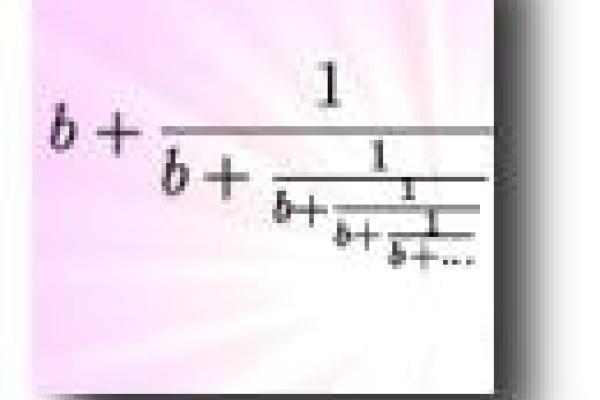
Chaos in Numberland: The secret life of continued fractions
One of the most striking and powerful means of presenting numbers is completely ignored in the mathematics that is taught in schools, and it rarely makes an appearance in university courses. Yet the continued fraction is one of the most revealing representations of many numbers, sometimes containing extraordinary patterns and symmetries. John D. Barrow explains.
Codes, computers and trees
Editorial
- New Millennium, New Name and New Look
- How to lie with statistics
- World maths year 2000
- Network capacity problem - issue 3 revisited
The origins of proof IV: The philosophy of proof
Robert Hunt concludes our Origins of Proof series by asking what a proof really is, and how we know that we've actually found one. One for the philosophers to ponder...
Planets, planets everywhere
Self-similar syncopations: Fibonacci, L-systems, limericks and ragtime
Kevin Jones investigates the links between music and mathematics, throwing in limericks, Fibonacci and Scott Joplin along the way. Plus is proud to present an extended version of his winning entry for the THES/OUP 1999 Science Writing Prize.
Maths Year 2000
In space, do all roads lead to home?
Is the Universe finite, with an edge, or infinite, with no edges? Or is it even stranger: finite but with no edges? It sounds far-fetched but the mathematical theory of topology makes it possible, and nobody yet knows the truth. Janna Levin tells us more.