
Article

When being wrong is right
What can we learn from the COVID crisis about finding consensus?

Julia Gog is Professor of Mathematical Biology at the University of Cambridge and co-lead of the JUNIPER network. Gog is also a member of the Scientific Pandemic Infections group on Modelling (SPI-M), an advisory group of the Department of Health and Social Care which provides expert advice to the UK government based on infectious disease modelling and epidemiology and fed results into the Scientific Advisory Group for Emergencies (SAGE) during the COVID-19 pandemic.
What can we learn from the COVID crisis about finding consensus?


To work out the famous R number you need to know the time between infections.

How long does it take for one person to infect another?
The doubling time for the Omicron variant seems to be scarily fast. But how do you calculate it?
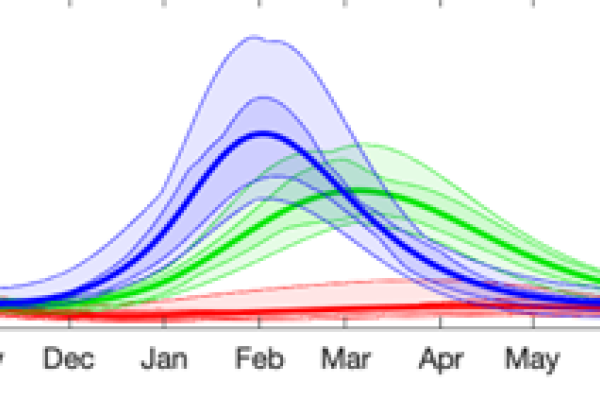
What can we expect from the pandemic this winter and autumn?

When it comes to loosening COVID restrictions all eyes are usually on R — but it's also important to take account of prevalence.

What's it like advising government on the maths behind COVID-19? Find out with epidemiologist Julia Gog in this new podcast series.

We are all longing to go into a lower tier, but this can come at a high price later on.
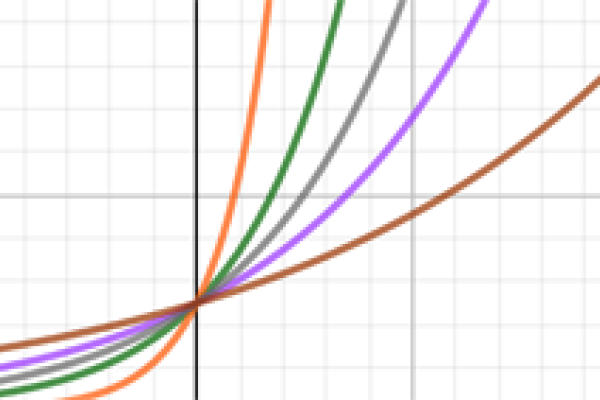
We all now know about R, but sometimes it can be good to consider another number: the growth rate of an epidemic.

In a previous article we introduced the problems that can arise when combine the reproduction ratios of a disease in different settings, such as hospitals and the community. In this article we dive into the maths that helps you get to the bottom of these problems.

We explore why you need to be extremely careful when combining the reproduction ratios of a disease in different settings, such as hospitals and the community.