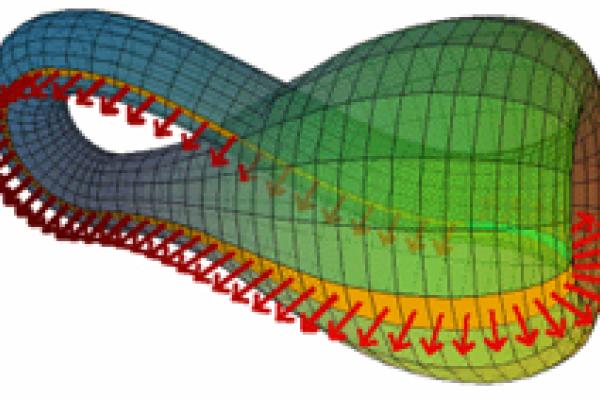
The paths of billiard balls on a table can be long and complicated. To understand them mathematicians use a beautiful trick, turning tables into surfaces.
The London Underground turns 150 today! It's probably the most famous rail network in the world and much of that fame is due to the iconic London Underground map. But what makes this map so special?
Progress in pure mathematics has its own tempo. Major questions may remain open for decades, even centuries, and once an answer has been found, it can take a collaborative effort of many mathematicians in the field to check
that it is correct. The New Contexts for Stable Homotopy Theory programme, held at the Institute in 2002, is a prime example of how its research programmes can benefit researchers and its lead to landmark results.
Data, data, data — 21st century life provides tons of it. It's paradise for researchers, or at least it would be if we knew how to make sense of it all. This year's AAAS annual meeting in Vancouver
devoted plenty of time to the question of how to understand large amounts of data. And there's one method we
particularly liked. It's based on the kind of idea that gave us the London tube map.
This is the second in a series of two articles in which Ian Short looks at topology using topographical features of maps. Find out about Jordan curves and winding numbers with the help of hermits, lighthouses and drunken sailors.