
The Isaac Newton Institute: Creating eureka moments

Image
Logo of the Isaac Newton Institute

One of the most exciting places in the mathematical world is the Isaac Newton Institute for Mathematical Sciences (INI), an international research centre and our neighbour here on the University of Cambridge's maths campus.

The INI attracts leading mathematical scientists from all over the world, and is open to all. We are proud to be collaborating with the INI to bring the cutting edge mathematics that is being done there to the general public. The following content is part of this collaboration.

Article

Information is surprise

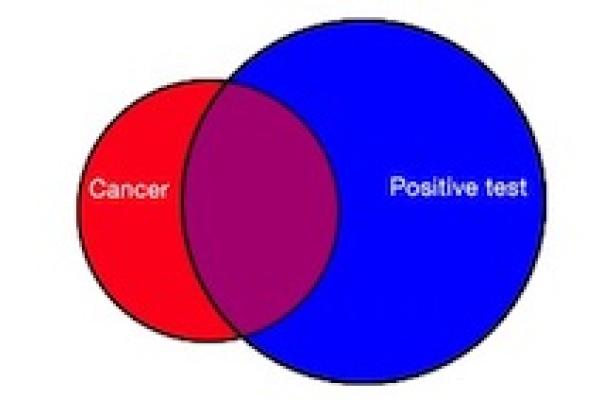
If I tell you something you already know, then that's not very informative. So perhaps information should be measured in terms of unexpectedness, or surprise?
Article

Satanic science

There's no doubt that information is power, but could it be converted into physical energy you could heat a room with or run a machine on? In the 19th century James Clerk Maxwell invented a hypothetical being — a "demon" — that seemed to be able to do just that. The problem was that the little devil blatantly contravened the laws of physics. What is Maxwell's demon and how was it resolved?
Article
newton

Maths in a minute: Newton's laws of motion

We've been dabbling a lot in the mysterious world of quantum physics lately, so to get back down to Earth we thought we'd bring you reminder of good old classical physics.

Article
Detail of M-theory multiple, Grenville Davey. Image © Isaac Newton Institute

String Theory, Duality and Art: how the Higgs boson and Turner Prize collide

On the face of it, an artist and a theoretical physicist might seem an unlikely pairing. But Turner Prize-winning sculptor Grenville Davey and string theorist David Berman's collaboration is producing beautiful, thought-provoking work inspired by the fundamental structure of the Universe. Julia Hawkins interviewed them to find out more about how the Higgs boson and T-duality are giving rise to art.

Article
icon

Renewable energy and telecommunications

When the mathematician AK Erlang first used probability theory to model telephone networks in the early twentieth century he could hardly have imagined that the science he founded would one day help solve a most pressing global problem: how to wean ourselves off fossil fuels and switch to renewable energy sources.
Article
velodrome

How the velodrome found its form

The Velodrome, with its striking curved shape, was the first venue to be completed in the London Olympic Park. Plus talks to structural engineers Andrew Weir and Pete Winslow from Expedition Engineering, who were part of the design team for the Velodrome, about how mathematics helped create its iconic shape.