Maths in a minute: Cognitive bias
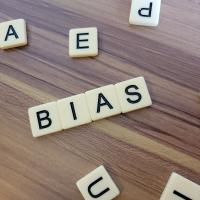
Our brains are optimised to make difficult decisions using the information available, often relying on shortcuts for split-second decisions. However, this can lead to objective errors when making calculations and estimates. By defaulting to past experiences or emotions rather than careful reasoning, we risk multiple forms of bias that lead to mistakes.
Confirmation bias
Confirmation bias is when we seek out information that confirms our existing beliefs or assumptions. For example, only looking for news stories about the mistakes a politician you don’t like has made, and actively not looking for any positive coverage.
The scientific method to proving a hypothesis is to take the opposite approach, and look for data that could prove it wrong. For example, if is someone claims only boys play football, then going only to boys' football matches will confirm their bias. If you don't look for a girl playing football, you are not testing your claim.

Maths in a minute: Hypothesis testing
Find out more about the scientific approach to proving hypothesis in this short introduction.
Optimism bias
Optimism bias occurs when a person perceives that they are at a lower risk than others of experiencing a negative event. For example, if someone convinces themselves that their house won't be flooded because the outcome is too awful to imagine, they may ignore the risk and fail to make necessary storm preparations.
Availability bias
Availability bias is when a person guesses the frequency of an event based on how easily they can recall past examples of such an event. This can lead to overestimating events that are memorable, or underestimating events that are less familiar. For example, if you haven’t experienced a medical issue, like catching the flu, or getting a sports injury, you might assume you’re the sort of person it doesn't happen to, even though you are at the same risk as the rest of the population.
Pattern spotting bias
Humans are hard-wired to spot patterns, and often see them where there are none. For example, if you flip a coin and it lands on tails four times in a row, you might expect the next flip to be tails. But each flip is independent and still determined by chance. Assuming that it will be tails because it’s previously been tails is availability bias.
Patterns in randomness is the apparent order or predictability that people observe in an inherently random situation. On 19 September 1985, there was a severe earthquake in Mexico City, and there was another on the same date in 2017. People were suspecting that earthquakes are more likely to occur in September, when they are indeed random and unpredictable events.
Cognitive biases shape how we understand, often leading us to rely on gut feelings or past experiences rather than actual data. This can lead us to overestimate or underestimate how dangerous something really is. Recognising these biases and correcting for them brings to light what we should really focus on - evidence and sound reasoning.
About this Article:
Jasmine Fischbach is studying Economics and International Business Student at Knoxville, Tennessee in the United States. In spring 2026 she completed an internship with Sense about Science, an independent charity that promotes the public interest in sound science and evidence.
This content now forms part of our collaboration with the Isaac Newton Institute for Mathematical Sciences (INI) and the Newton Gateway to Mathematics.The INI is an international research centre and our neighbour here on the University of Cambridge's maths campus. The Newton Gateway is the impact initiative of the INI, which engages with users of mathematics. You can find all the content from the collaboration here.
