
Article
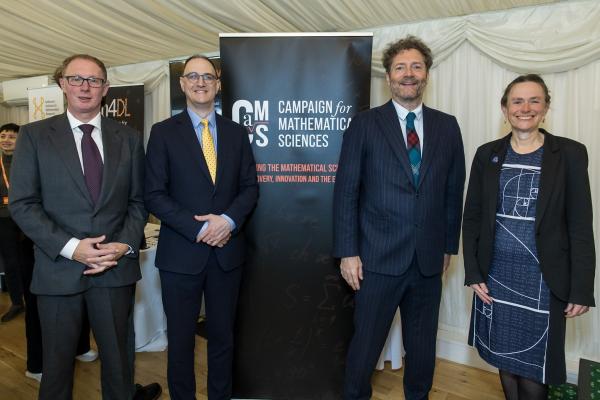
Maths goes to Parliament
The Maths Week Parliamentary Expo raises awareness of the power of maths among policy and law makers.
The Maths Week Parliamentary Expo raises awareness of the power of maths among policy and law makers.

A horrible aspect of the COVID-19 pandemic were the school closures. To avoid them in future epidemics, scientists need to know more about who comes into contact with whom in a school setting. This is what contact surveys are for.

Find out how binary logic leads to a really hard problem that can embody lots of other really hard problems.

You may have heard of a class of problems called NP. But have you heard of coNP? Find out what it is as what it means for P versus NP.
Mathematicians met at the Royal Society to decide on their response to the AI revolution in mathematics. Is it the end of human maths or the beginning of a golden age?
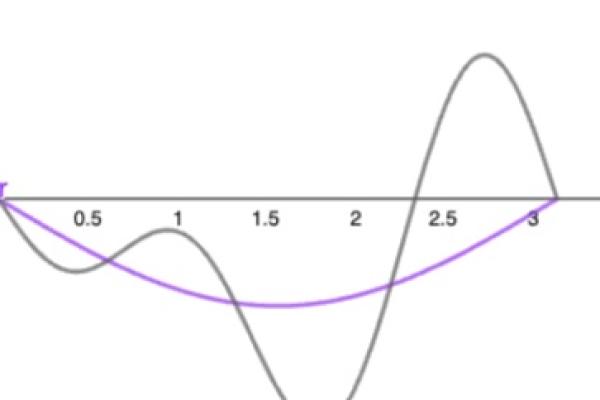
When you pluck a guitar string it vibrates at many resonant frequencies at once. What might that look like? Find out with our animation.
The Laplacian operator turns up all over maths. Here's a reasonably light-touch introduction and a look at why it forms part of the wave equation.
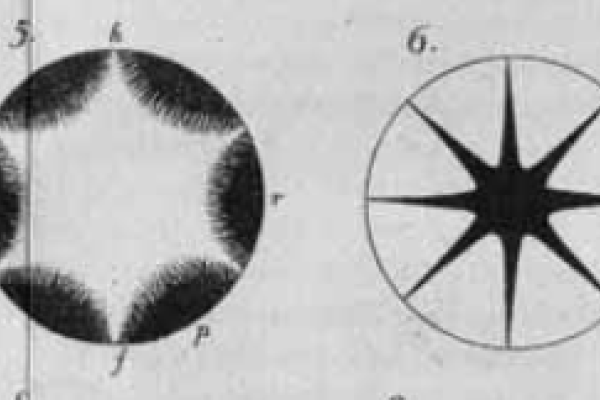
If you sprinkle sand on a vibrating plate it forms the most beautiful patterns. We explore why that happens, what it has to do with mathematical pioneer Sophie Germain, and how the question opens up a huge range of maths.
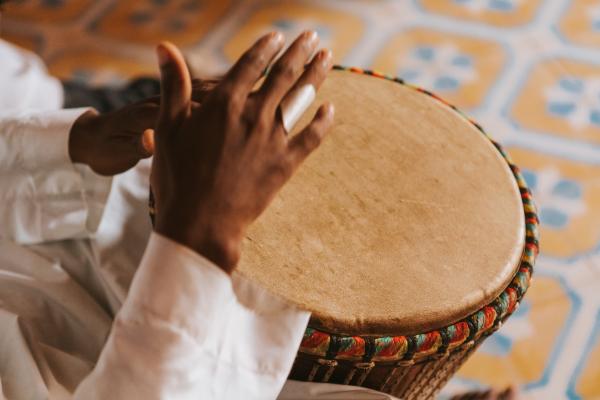
The sound of a plucked string depends on how long it is, so you can hear the length of a string. But can you hear the shape of a drum?

On September 8th, 2026, OpenAI announced that one of its systems had solved the Navier-Stokes Millennium Problem. But has the problem really been solved? What exactly was the contribution of AI? And what does the advance of AI on mathematics mean for the field?

AI has recently solved some very hard maths problems. Did AI really do this on its own? What does it mean for the future of mathematics? And how should the maths community respond?

How do you adjust your approach when new information is coming in all the time? The answer lies with Bayes Theorem.