Ulrike Tillmann: A view from the incoming IMU President
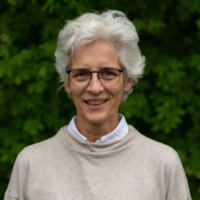
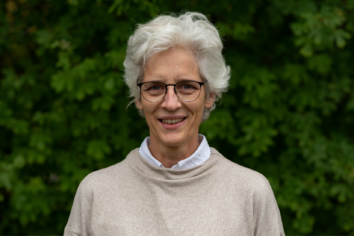
The International Mathematical Union (IMU) has a new President: Ulrike Tillmann, Professor of Mathematics at the University of Oxford and Director of the Isaac Newton Institute for Mathematical Sciences. She was confirmed in the role at the General Assembly of the IMU in New York in July 2026.
The IMU was founded in 1920, at a time when internationalisation was important. "The reasons, then and now, are still the same," says Tillmann. "Mathematics has a global community and can foster international cooperation and dialogue even when other channels are closing. There are also some concerns and issues concerning our international community that are better solved and agreed on internationally. The IMU is there to help that process and give it structure."
The IMU was brought into life to represent mathematics on a global stage and bring the community together. Its most visible activity is the International Congress of Mathematicians (ICM), held every four years at varying locations throughout the globe. The last few ICMs have been in Hyderabad (India, 2010), Seoul (South Korea, 2014), Rio de Janeiro (Brazil, 2018), and Helsinki (Finland, 2022, virtual). This time around it is being held in Philadelphia, USA.
The International Congress of Mathematicians
The ICM is one of the biggest and most prestigious conferences in mathematics, drawing thousands of participants from around the world. A major attraction are the awards of the Fields Medals, as well as a host of other prizes: the Abacus Medal (for theoretical computer science), the Gauss Prize (for mathematics with important applications), the Chern Medal (a lifetime achievement award), and the Leelavati Prize (recognising outstanding public outreach work for mathematics).
The ICM 2026
See here for all our coverage of the ICM 2026, including of the prizes mentioned in this article.
The ICM is unusual in that it's a general conference, covering the breadth of mathematics. "Nobody is going to pretend to understand all the talks," says Tillmann. But this generality illustrates a function of the ICM that goes beyond providing an opportunity to meet and celebrate achievements. In putting together the conference schedule, the IMU's Structure Committee effectively conducts a survey of the current state of the entire field, with dedicated subject panels surveying specific areas.
"[The committees] try to understand how mathematics has changed in the last few years: what are the [important] subject areas, what are exciting and deep contributions, and what are new developments that [deserve] special attention," says Tillmann. "That kind of thinking is really important for us as a community." David Hilbert would certainly have agreed: he used the 1900 ICM in Paris to present ten of his 23 problems, setting the agenda for twentieth century mathematics.
Unsurprisingly, a special focus of this year's ICM is artificial intelligence (AI), with special lectures and panel discussions exploring the topic. This is not just because AI currently drives a lot of exciting research, and influences how research is done, but also because it highlights the impact of mathematics on the wider world.
"A large part of AI is mathematics, so we should have a voice," says Tillmann. "Mathematicians can be somewhat modest about the impact of their field. But it is an undeniable fact that AI would be impossible without mathematics. On the other hand, AI can also be used to advance mathematics itself. Recently we have seen some spectacular examples in this direction, such as the solution of the Erdos' Unit Distance Problem."
The International Mathematical Union
Representing mathematics beyond the confines of the research community is one of the goals of the IMU. This also includes helping to shape, through the International Commission on Mathematical Instruction, how mathematics is taught further down the pipeline. The rapid advances in data science and AI rear their heads here too: Tillmann thinks that the traditional notion of school mathematics will need to be broadened to equip younger generations with the tools they need to deal with this seismic shift.
Other goals of the IMU focus on mathematicians themselves. Democratising the field and fostering diversity and inclusion are central aims, addressed by the Commission for Developing Countries, the Committee for Women in Mathematics, and the Ad Hoc Committee on Diversity. "[Building a truly inclusive community] is difficult and more needs to be done," says Tillmann. "mathematics has made good progress in recent years, but it can also be seen as elitist because we have absolute standards. It's important to find a language, or a narrative, that supports both."
In her time as IMU President Tillmann plans to build on all these efforts of the IMU, while at the same time "keeping a calm ship". The timing of our interview with Tillmann, the day after a small but heroic Curacao took on Germany in the FIFA World Cup, put her in mind of the extension of this year's World Cup to include more countries from all over the world. A leaf might be taken out of that book, she thinks, "but I'll have to think about it more."
Keeping doors open
Returning to the IMU's most famous activity, the ICMs, the ride hasn't always been smooth, not even in recent times. The ICM 2022 was moved from St Petersburg to Helsinki rather late in the game, in response to Russia's invasion of Ukraine. This year's choice of host country, the USA, has sparked controversy and (threats of) boycott.
But Tillmann has fought hard to see the Congress go ahead. "It's important for us to get together as a community, and also to meet people from other subject areas. [The ICM] is a fantastic opportunity, also for younger generations, to get to know some of the [big names] they might have heard of — big names from older generations, but also the stars of the day, which are the Fields Medallists." As it happened, two of the Fields Medals were awarded to Chinese mathematicians (Yu Deng and Hong Wang). The Abacus Medal went to Iranian mathematician Shayan Oveis Gharan.
This year's haul of prizes also included two mathematicians from the UK. One is Graeme Segal, former LMS President, who won a Chern Medal. His work is of the type that may be most resistant to be replaced by AI. "Graeme Segal's work transcends subject boundaries — it is very much about ideas and understanding, rather than specific problems, and about finding a unified language," says Tillmann.The other UK laureate is Hannah Fry, who won a Leelavati Prize. "What a fantastic promoter of mathematics to the outside world! She has popularised mathematics, but also communicated mathematics in the way mathematicians think about it."
But the UK is coming away with a third prize too. The IMU General Assembly voted by a large margin for the next ICM in 2030 to be held in Glasgow, with the General Assembly that year taking place in Dublin. Tillmann didn't have a vote due to the conflict of interest and she's pleased. "I think it's great. The mathematical world will come to the UK and that can only be a good thing."
This content was produced as part of the collaboration between plus.maths.org and the London Mathematical Society and with kind support of the Institute of Mathematics and its Applications.