
Causal inference: Identifying cause and effect
Causal inference is a branch of statistics which seeks to draw credible conclusions about cause and effect from data even in situations that aren't straight-forward. In recent years the amount of data in the world has absolutely exploded, so causal influence is a fast-growing field. It's relevant in medicine and public health, the physical sciences, and the social sciences. Causal inference is also relevant to artificial intelligence which is all about learning from patterns in data.
A research programme at the Isaac Newton Institute for Mathematical Sciences, called Causal inference: From theory to practice and back again, brings together researchers and practitioners from all sorts of areas for seminars, workshops, and the opportunity to spend extended quality time exchanging ideas. Apart from developing the theory behind causal inference, participants of the programme also look at a broad range of application areas, from neuroscience to the law.
The best way of discerning cause and effect is to perform experiments in controlled conditions. The gold standard are randomised controlled trials.
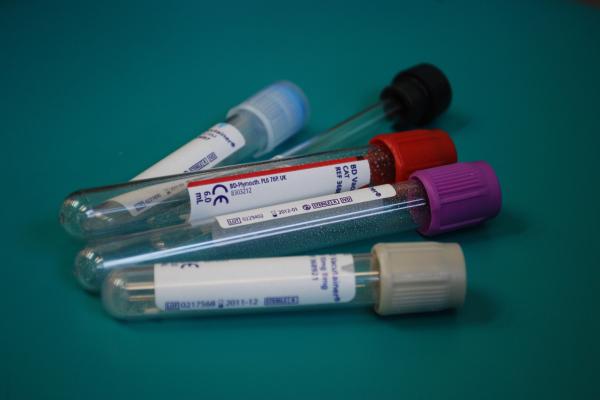
Maths in a minute: Randomised controlled trials
How do you know if a medical treatment, or other intervention, actually works? Randomised controlled trials provide an answer.
Sometimes, however, it isn't possible to perform such controlled experiments. An important, and fun, tool you can use in this case is a directed acyclic graph, or DAG.

The DAG behind the data
A DAG is akin to a cause-and-effect mind map. It helps you think through a situation in a systematic way. The patterns that show up in a graph indicate where you need to be careful when analysing your data to stop bias from creeping in. DAGs are useful, but also fun to think about. Find out more in this article.
The reason DAGs are useful is because when you are analysing data it's easy for bias to creep into your results. Here are a few important forms of bias.
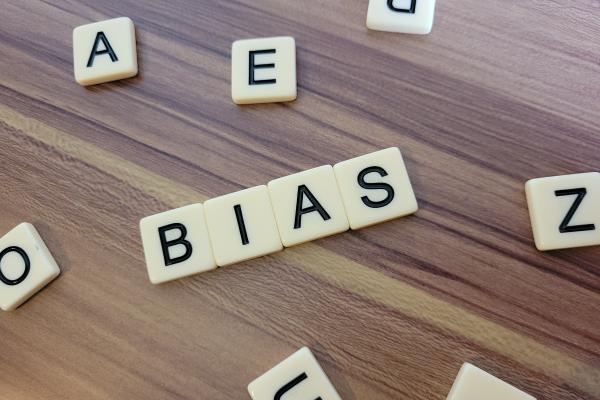
Maths in a minute: Cognitive bias
Cognitive biases shape how we understand data. Being aware of them gives us a better chance of avoiding bias.

Maths in a minute: Correlation versus causation
Wet cats don't cause umbrellas and umbrellas don't cause wet cats.

Maths in a minute: Selection (and survivorship) bias
Data can give us incredibly useful insight, but they can also mislead. Here's an example.
This content was produced as part of our collaboration with the Isaac Newton Institute for Mathematical Sciences (INI) and the Newton Gateway to Mathematics.The INI is an international research centre and our neighbour here on the University of Cambridge's maths campus. The Newton Gateway is the impact initiative of the INI, which engages with users of mathematics. You can find all the content from the collaboration here.

