
The end of human mathematics or AI golden age?
"There's the potential for a golden age of mathematics, but much of what we value is under threat."
This is how mathematician Ben Green opened the Mathematics in the Age of AI event at the Royal Society last week, to a packed lecture hall and over 750 people attending online. Green had convened the meeting together with Jon Keating (both from the University of Oxford) in response to the recent events in the world of maths.
Things started to heat up in late May when AI companies began announcing their systems were solving famous, hard problems at the frontiers of current research. The initial trickle soon turned into something resembling a tsunami. On October 6 OpenAI dumped 721 maths manuscripts online — in one day alone. A highlight of this haul, the quasi Riemann hypothesis, illustrates just how momentous some of these results have been. "It's the most important result in [its area] in 100 years," James Maynard (University of Oxford), holder of a prestigious Fields Medal, told the Royal Society audience in his talk. "I would have confidently (but incorrectly) said that this result was completely out of reach".
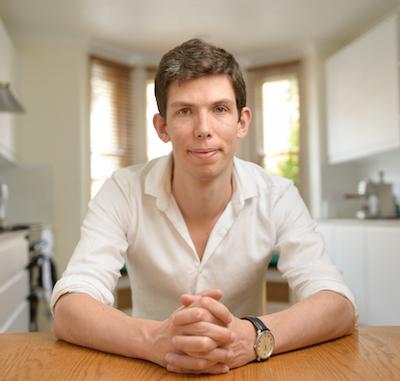
about his work here. (Photo by Ryan Cowan)
Reactions from mathematicians have been mixed, even conflicted. On the one hand there's excitement about the break-neck acceleration of progress mathematics is likely to see with the help of AI. On the other hand, there's nervousness and fear at the uncertainties ahead. "[This is] the end of mathematics as we know it," said Miranda Cheng (University of Cambridge) in her talk about the powerful uses of AI in theoretical physics. "But is it the end of human mathematics or the beginning of a golden age?"
The next generation
While nobody knows exactly what will happen next, there seems to be consensus on where the immediate challenges lie. The most pressing one concerns early career mathematicians – PhD students and postdoctoral researchers. There was a panel discussion chaired by Julia Gog (University of Cambridge) devoted to the topic, but it came up in many of the other talks and panels too.
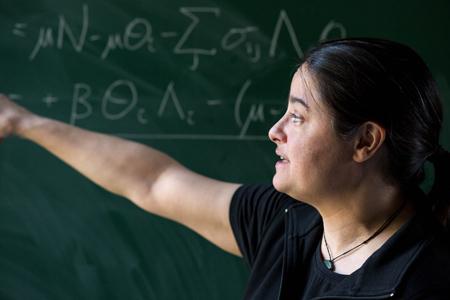
Solving difficult problems has long been a proxy for mathematical progress and a yardstick to measure the prowess of early career researchers. If problems can be solved at the touch of an AI button, then this pulls the rug from under these researchers' feet. And as panellist Helen Wilson (Isaac Newton Institute for Mathematical Sciences) said, "If the juniors quit, where will the seniors come from?"
Young researchers are indeed worried. A survey conducted by the Martingale Foundation found that 89% of students surveyed thought that using AI could weaken their development as mathematicians. Among 50 students asked about their career plans, 62% said AI has made a research career seem less achievable. There is also inequality in access to AI. The survey found that around 25% of students already pay for an AI tool at least partly out of their own pocket. And as was mentioned frequently during the Royal Society meeting, those who don't use AI are in danger of being left behind.
Most mathematicians agree, however, that problem solving is just one aspect of doing maths. Another is the building of theories. This does involve solving hard problems, but it also involves presenting solutions well so that others can digest them, picking out the interesting ones, and fitting them together in a coherent and illuminating whole. To borrow a mountaineering analogy mentioned in discussions, solving a problem using AI is like getting a helicopter ride straight to the top of a mountain. Building theory, by contrast, is about understanding the nature and history of entire mountain ranges, rock by metaphorical rock. It's usually a collaborative effort. And as Maynard noted: "Despite the frantic pace of AI, we shouldn't rush to grab understanding. Slow contemplative thinking is even more important than before."
Current AI efforts are bad at presenting, explaining, and curating their results. (And this is quite aside from the fact that they build heavily on human-made theory, but regularly fail to attribute this prior work). There remains a role for humans here, but the way we assess young researchers' work will need to adapt. Suggestions included crediting students for solving a particular problem even if AI got there first. PhDs could be restructured so that assessment is ongoing — that way it won't matter so much if a problem a student is working on is solved by AI during their degree. Interpretation and explanations of AI results could also be counted towards PhD work. Supporting students in building communication skills would need to become a crucial component of PhD training.
Ironically, all this might make training and assessment more human, which comes with its own pitfalls. As Edward Crane (University of Bristol, Heilbronn Institute for Mathematical Research), Julia Wolf (University of Cambridge), and others pointed out, when relying on human assessment, knowing the right people might become even more important, deepening existing inequalities. Collaborative working can exclude people.
Wilson said she doesn't see the demand for maths graduates going way: they are highly skilled and in demand for their critical thinking. "But we need to work out how to modify our structures. The dust will settle, but we need to work out how to get to the other side." What's important now, said Wolf, is to "stay curious, do maths, and look after those around you."
A tsunami of maths
Another issue is the sheer volume of mathematics that AI is going to produce. A piece of mathematics enters the accepted mathematical canon through peer review. This is arranged by academic journals: once you've completed some maths you submit a paper to a journal, the journal recruits reviewers and (after some corrections and potentially re-submissions) the paper is (hopefully) published. A crude but easy way of assessing a mathematicians' merit is to look at their list of publications.
With the tsunami of maths papers now arriving, this system isn't just creaking, it's become "unsustainable" according to Matthew Colbrook (University of Cambridge), who was part of a panel on the future of publishing. Even if AI papers were easy to read, which generally they are not, human reviewers could never keep up.
One way of dealing with this is — of course — to use AI. As Kevin Buzzard (Imperial College London) explained in his talk, this can build on a project that was underway long before AI became an issue: the effort to formalise mathematics. Despite peer review, human mathematics contains mistakes. Formalisation involves using an automated proof assistant, in particular a piece of software called Lean, to check that a mathematical argument is watertight.
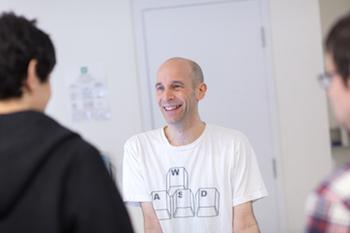
To use Lean you need to translate the argument into code that Lean can understand and that takes time, at least if you're human. The sum total of the mathematics that has been formalised by humans so far involves 2.5 million lines of codes, written by hundreds of people over nine years. AI's achievements are staggering by comparison. Only last week the AI company Axiom Math announced it had formalised one of the most voluminous results in mathematics, the classification of finite simple groups, using 43 millions lines of Lean code – in only 22 days.
Buzzard conjectured that the vast majority of currently known mathematics could be autoformalised (formalised with the help of AI) by 2029. It's conceivable that autoformalisation could also deal with the tsunami of maths papers that looks likely to become a constant stream. (Though as Buzzard pointed out, there can be issues with AI "reward hacking" its way to success — see also this paper co-authored by Anders Hansen, University of Cambridge.)
Once processed in one way or another, the abundance of maths results could become "raw material", to quote panellist Thomas Bloom (University of Manchester) for human mathematicians to work with. Fellow panellist Amanda Turner (University of Leeds) suggested this might present an opportunity for journals: their role could lie in curating results in different areas, signposting readers to what's interesting. The role of peer reviewers, suggested Bloom, might not be to check for correctness, but to gauge what's "worthwhile for humans to read".
Even if the bottleneck of maths can be resolved, there remains the issue of human merit. The current credit system builds on priority: whoever is first to solve a problem gets the credit, and their merit is built on such credits. With AI now likely to clinch all the results first (albeit based on human work), according to Bloom, "priority will become meaningless. Instead [it will be] important to produce the best [article] that you can write."
This again shifts the focus towards exposition and communication — there were even suggestions that journals might in future collate, not articles, but videos of human mathematicians talking about maths.
It's too early to tell how publishing is going to react. Hopefully, its response will align with mathematicians' needs, which meetings like this one are trying to identify. How we will measure mathematicians' merit in the future is also hard to predict. But, as Turner suggested, all this might have a pleasant side effect: "The ego will have to go out of mathematics."
Corporate take-over?
The meeting also heard of other existing initiatives, which pointed to another problem: the fact that power currently rests in the hands of a small number of profit-making AI companies who are using mathematics results for bragging rights.
Martin Hairer (EPFL, Imperial College London), another Fields Medallist, presented the First Proof Project, conceived about a year ago as a way of holding AI companies to account. When an AI model finds a solution to a maths problem it usually has access to the sum total of mathematical knowledge as it appears on the internet. This can make it hard to assess just how much the AI contributed to the solution. (And indeed, AI companies have been accused of overstating their models' contributions, see for example this article on the Navier-Stokes Millennium problem and this article on an important result from group theory).
Rather than relying on companies' announcements, First Proof tests AI models on problems that have come up naturally in mathematicians' work and whose solutions have not yet been publicised. Results from the third batch of testing, published on October 14, are quite sobering. When it comes to problem solving abilities, frontier models, commercial models which belong to AI companies, are far ahead of open-weight models which anyone can run on their own hardware. He noted that a key resource for mathematical research is controlled by two US companies. What's more, substantial amounts of money can substantially improve the performance of frontier models — which means that mathematical progress could become a matter of the depth of your pockets.
Francesco Fournier-Facio (Heriot-Watt University) had a striking story that illustrated the impact of this bragging behaviour has had on the experience of being a mathematician. A week after one of his talks (on the sofic groups) appeared on Youtube, someone with no relevant background emailed to say they'd used AI to solve the open problems he'd mentioned. As a result he will now stop talking publicly about his current unfinished work. "That is very sad, but as an ECR that is a reality".
Ana Caraiani (Imperial College London) raised similar concerns in her talk introducing the Association for Human Mathematics, which aims to support, safeguard, and nurture human mathematics and mathematicians. One aim is to ensure that AI free mathematics remains acceptable. Caraiani pointed out that for millennia, mathematics has functioned largely as a "gift economy" with researchers sharing and collaborating on results. The sway of private companies over AI capabilities threatens to introduce a paywall and that would deepen existing inequalities. "The next steps cannot be dictated to us by AI companies," she said. "The maths community must decide for itself how to adapt, with the best interest of all stakeholders in mind."
A panel discussion on culture and ethics echoed a solution that has been suggested by many mathematicians: a public-funded open-weight AI model that is just as good as frontier ones and available to all mathematicians. In the words of panellist Fournier-Facio, "we can't have mathematics depend on subscriptions." Such an effort will require money, and the meeting duly included a presentation of one of the major funders of mathematics in the UK, XTX Markets, advertising some grants it has awarded for AI-assisted mathematics.
A future without humans?
The thorniest question of them all fell to the third Fields Medallist to present on the day, Timothy Gowers (Collège de France and University of Cambridge): What should we do if AI no longer needs mathematicians? There's a possibility after all that AI will become better than us at all those things it's currently bad at: building theory and formulating clear and insightful explanations, for example. Should AI become superhuman at all aspects of doing maths, can we justify the continued existence of human mathematicians?
Gowers suggested several possible answers to this question. Losing mathematics as a scholarly tradition would be bad for society, just as it is bad to lose other scholarly traditions. Learning mathematics is highly life-enhancing, and learning requires human teachers with deep mathematical knowledge, at least for now. While AI delivers an amazing tool for doing mathematics, we may still need humans to decide what the tool is good for. And if we don't have a large pool of human mathematicians, we are ceding large amounts of power to AI.
These aren't all the possible answers and they are not all satisfactory, Gowers conceded. And whether these answers will convince those on whom the future of mathematics depends — young people and funders — should AI become superhuman, remains to be seen.
Will mathematics continue to exist as a human activity? Martin Bridson (University of Oxford) provided an argument echoing many of the discussions we have witnessed over this turbulent summer: "humans can't abide not knowing, so we do mathematics". The idea is summed up in a (archaically gendered) quote by the 13th century polymath Roger Bacon:
"He who knows not mathematics cannot know the other sciences nor the things of this world…knowledge of this science prepares the mind and raises it up to a well authenticated knowledge of all things."
"Civilisation has lived through many revolutions," said Bridson, "but this quote will continue to be true."
About this article
Marianne Freiberger and Rachel Thomas are Editors of Plus. They attended the Mathematics in the Age of AI meeting at the Royal Society in London in October 2026.
This content forms part of our collaboration with the Isaac Newton Institute for Mathematical Sciences (INI) – you can find all the content from the collaboration here.
The INI is an international research centre and our neighbour here on the University of Cambridge's maths campus. It attracts leading mathematical scientists from all over the world, and is open to all. Visit www.newton.ac.uk to find out more.
