

A millennium problem solved by AI?
On September 8th, 2026, the artificial intelligence company OpenAI announced that one of its systems had proved one of the biggest maths problems in existence: the Navier-Stokes Millennium Problem. Back in 2000 the Clay Mathematics Institute had named it as one of the seven hardest mathematical problems around, and offered one million dollars for its solution.
But has the problem really been solved? What exactly was the contribution of AI? And what does the advance of AI on mathematics mean for the field?
We talked to Chris Budd, a mathematician of the University of Bath, to find out more. Budd has himself worked on the Navier-Stokes equations and he co-leads the Maths for Deep Learning research project, which is all about understanding the mathematics that powers artificial intelligence. So he is perfectly placed to provide some answers.
The problem
The Navier-Stokes equations describe how incompressible fluids move. A fluid is a gas or a liquid. It's incompressible if its density does not change. Air is very nearly incompressible, water is definitely incompressible, and so are most of the other fluids we come across in real life.
The Navier-Stokes equations have a huge range of applications. For example, they are used to build aeroplanes and wind turbines, and they are essential in predicting the weather. The equations are named after the mathematicians George Gabriel Stokes and Claude-Louis Navier who developed them in the first half of the 19th century.
To use the equations in real-world applications, you need to solve them and that's no easy feat. You need the help of computers, even supercomputers, to find approximate solutions. But solving the equations is not what the Millennium problem is about.
"The question that has been around for a long time is whether the Navier-Stokes equations fully describe reality," explains Budd. In order to predict the weather, for example, you would start with the Earth's atmosphere (which is a fluid) as it is today and then use the Navier-Stokes equations to evolve these initial conditions forward in time.
The question is whether the equations will always give you meaningful answers for quantities like the pressure or the velocity of the fluid, or whether they could develop singularities where some quantities become infinite. "Because nature doesn't really like infinity, that would mean that the equations have actually broken down as a solution to the real-world problem," says Budd.
"The Navier-Stokes equations do behave themselves over short times, but no one up to now has been able to say whether solutions will always stay finite or whether there might be some time, for some initial conditions, where they become infinite. That is what the Millennium Problem is all about."
The answer
Open AI's system has proved that, under certain conditions, the Navier-Stokes equations do indeed develop a singularity in finite time. In other words they can break.
This does not mean that planes will fall out of the sky or weather forecasts cease to work. "The singularity only happens when the Navier-Stokes equations have stopped working anyway because you've gone below the molecular length scale," explains Budd. The Navier-Stokes Millennium Problem is a purely theoretical question that has no bearing on real world applications. The challenge lay, not in making applications better, but in understanding the mathematics.
OpenAI's solution did not come as a surprise to mathematicians working in the field. "There's been a train of thought for a few years now, which was kicked off by the mathematician Thomas Hou," says Budd. "It suggested that it might be possible for the Navier-Stokes equations to become singular in a certain way, by a mathematical mechanism called blow-up."
"Hou published some amazing papers where he did some incredibly careful numerical computations, backed up by a certain amount of computer proof. This gave a pretty strong hint that there were solutions which might become singular for a very precise type of initial condition. Since Hou's seminal work people have been building on this, trying to see whether they could rigorously fill in all the gaps. But it kept slipping through their fingers — they thought they were there, but then it would slip away again." Tristan Buckmaster and Levent Apölge were two protagonists in this mathematical story.
So is the millennium problem solved?
The short answer, according to Budd, is "no". "As far as I'm concerned, the Millennium Problem stated in its cleanest form has not been solved," he says.
The issue lies with what mathematicians call forcing — the introduction of an extra mathematical element that acts on the equations to force them to behave in a certain way. For an example, if you want to describe the Earth's atmosphere, you need to also take account of the energy coming from the Sun and the Earth's rotation. Neither of these is present in the pure form of the Navier-Stokes equations (they only describe fluids), so extra components need to be added to the mathematical description of the physical system.
"The OpenAI proof adds in a relatively mild forcing component. Essentially that was put in to allow the particular type of solution being considered to be a solution," Budd explains. He concedes that the approach might well work for the pure form of the Navier-Stokes equations, without forcing, but he's not yet willing to put his hand in the fire. "I think most people think the forcing doesn't matter too much and that OpenAI have succeeded. But, having thought about this problem myself and seen how it can slip through your fingers when you think you're on it, I am a little bit nervous."
It's worth noting that the OpenAI proof has been passed through a proof assistant called Lean, which has given it the green light. Lean is a software program which can check the logic of a proof to identify gaps or errors (find out more here). But it is only as good as the input it is given. "The slight danger is that there might be some implicit assumptions that Lean wasn't told about," explains Budd. In particular, the nature of a solution to the Navier-Stokes equations depends crucially on certain boundary conditions, which define the context in which the equations are acting. "You have to get these boundary conditions exactly right for singularities to exist — and that is a phenomenally hard problem."
Humans versus AI
Budd will only be convinced that the Millennium Problem is solved once human experts have thoroughly checked the OpenAI proof. In this he agrees with the Clay Mathematics Institute, which will only award the $1m when a peer reviewed paper has appeared in an academic journal. In any case, OpenAI has said it does not intend to claim the money should its proof pass the test.
But even if OpenAI did want the money, would it even deserve it? What was the relative contribution of AI versus humans? "The AI proof would not have worked if there hadn't been the previous work done by humans, I'm pretty sure of that," says Budd. "The AI didn't dream anything up from scratch."
In essence, the OpenAI system found a counter example to the conjecture that the Navier-Stokes equations do not have a singularity — and that's easier than proving the conjecture is true. To see why, imagine I tell you that all the sheep in the world are white. To prove me wrong, all you need to do is find a single black sheep — that's the counter example. To prove me right, you somehow need to exclude the theoretical possibility that none-white sheep can exist, and that's fundamentally harder.

"AI has proved really rather good recently at finding counterexamples by searching through a lot of possibilities until it finds the one which works," says Budd. Given that computers generally, and AI in particular, are much better than humans at looking through vast amounts of information, it's not surprising AI is good at finding counter examples.
"If the AI was able to overcome some technical barriers in this approach then well done it, I say. In my mind it's a good collaboration between computers and human beings," says Budd.
(We should note, at this point, that there is now a dispute over who should get the credit. It's to do in part with the possibility that OpenAI's systems might have "listened in" on conversations mathematicians had with Large Language Models discussing the mathematical approach in question – find out more in this article.)
The future of maths
The Navier-Stokes Millennium problem is not the only high-profile maths question that has recently been attacked by AI. Its success has sent shock waves through some parts of the maths community. Mathematicians mourn the loss of beloved problems and fear for the future of human mathematics in a world where hard problems may become solvable at the push of a button. You can find out more about mathematicians' worries in this article and in our report from the International Congress of Mathematicians 2026.
Budd sees a more positive future. As co-lead of the Maths for Deep Learning research project he works on the mathematical foundations of artificial intelligence — because ironically, AI is built entirely out of maths. "In my area of research AI is generating huge, interesting mathematical problems. We haven't got the resources to deal with all the problems that AI itself is generating and cannot internally solve," he says.
"The question of whether you can trust an AI solution to a problem and the question of how to make the workings of AI more transparent — these are mathematical questions." And they do, says Budd, involve the whole breadth of mathematics. "It's difficult to think of an area of maths that isn't relevant to AI."
The advance of AI may therefore create more jobs for mathematicians than it'll take away. Beyond this, Budd points out that the answer to one maths problem usually generates more open questions (see, for example, our article about Fermat's Last Theorem). "The job of a mathematician may no longer be so much about proving really technical things, but to come up with the great problems, to come up with the great ideas."
Budd does concede that the transition to a world where AI does more maths comes with some challenges — for example, the mathematics community needs to figure out how to deal with a tsunami of AI generated mathematical papers, which all need to be checked and potentially published. It will also need to adjust the way maths is taught to the next generation of mathematicians.
But generally, Budd is excited. "AI is opening up a whole new world for us. And I think that this new world we're in is a great one."
About this article
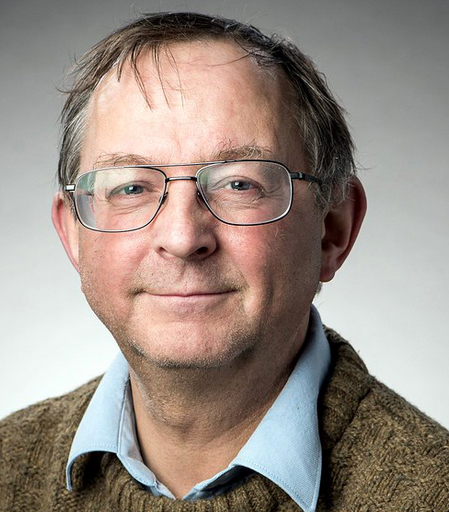
Chris Budd OBE is Professor of Applied Mathematics at the University of Bath, Director of Knowledge Exchange for the Bath Institute for Mathematical Innovation, and Principle Investigator of the Maths for Deep Learning research project. He has also been awarded the 2026 Gold Medal from the Institute of Mathematics and its Applications.
Marianne Freiberger is Editor of Plus. She interviewed Budd in October 2026.