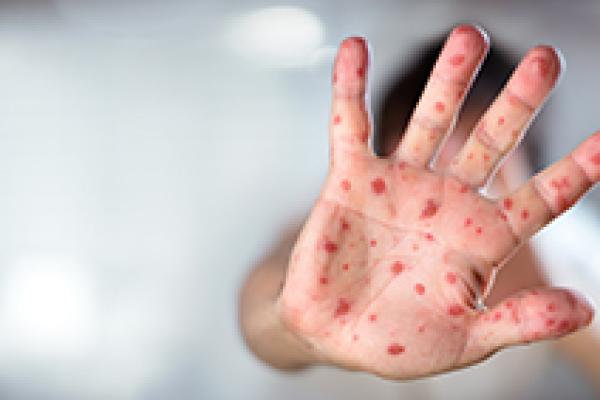
Measles cases on the rise: Why this is worrying and what we can do
We look at the recent rise in measles cases, why it has led to a national health incident being declared, and what can be done to avert the threat.
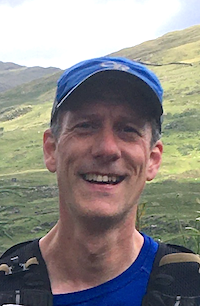
Matt Keeling is a mathematician who specialises in the spread of infectious diseases. He has worked on a number of infections from measles to influenza and from COVID-19 to plague. He has been a member of the Scientific Pandemic Influenza Group on Modelling (SPI-M) since 2008, a member of the Joint Committee on Vaccination and Immunisation (JCVI) from 2010 to 2022, and a member of the New and Emerging Respiratory Virus Threats Advisory Group (NERVTAG) from 2023.
We look at the recent rise in measles cases, why it has led to a national health incident being declared, and what can be done to avert the threat.
Was vaccinating vulnerable people first a good choice? Hindsight allows us to assess this question.
Epidemiologist Matt Keeling tells us about his work on the roadmap out of lockdown, whether the models have been too pessimistic, and what it's been like producing scientific results that carry so much weight.
There have been accusations that the modelling projecting the course of the pandemic was too pessimistic. Are they justified?
Should we again reduce our social contacts? Is vaccinating 12-to-15-year-olds effective? What about boosters? The ready reckoner helps provide some answers.
What can we expect from the pandemic this winter and autumn?
Are they safe? Are they effective? Will they stop the pandemic? Find out with our FAQ informed by experts.
We can't say for sure, but everything depends on how many people agree to be vaccinated.
Modelling shows that old and vulnerable people should be prioritised.
Like any medical drug, vaccines are tested in large-scale randomised controlled trials.
The efficacy of vaccines is estimated from trials, using statistical techniques.
Because the vaccine may not stop transmission of the virus.