Content about “ engineering
”
How the velodrome found its form
Shaping our bones
We know that applying a force to a bone during its development can influence its growth and shape. But can we use our understanding of how developing bone reacts to mechanical forces to help people suffering from diseases that lead to bone deformities?
Making gold for 2012: The podcast
Last month leading researchers in sports technology met at the Royal Academy of Engineering in London to demonstrate just how far their field has come over recent years. The changes they make to athletes' equipment and clothes may only make a tiny difference to their performance, but once they're added up they can mean the difference between gold and silver. In this podcast we talk to some leading sport engineers.
Facing the climate challenge
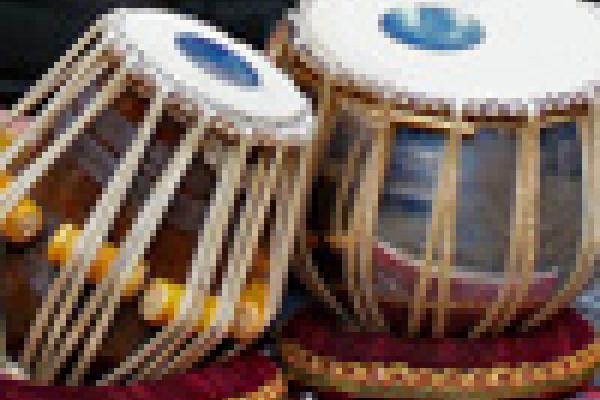
What makes an object into a musical instrument?
Many things make a noise when you hit them, but not many are commonly used to play music — why is that? Jim Woodhouse looks at harmonic and not so harmonic frequencies and at how percussion instruments are tuned.
Making a racket: the science of tennis
As London is heading for the 2012 Olympics, it's not just athletes who are gearing up for action. Engineers, too, are working hard to produce the cutting-edge sporting equipment that guarantees record performances. If you're a tennis player, your most important piece of equipment is your racket. Over recent decades new materials have made tennis rackets ever bigger, lighter and more powerful. So what kind of science goes into designing new rackets?
Supersonic Bloodhound
In 1997 Andy Green was the first to break the sound barrier in his car Thrust SSC, which reached speeds of over 760mph. Now he and his team want to push things even further with a car called Bloodhound, designed to reach the dizzy heights of 1,000mph, about 1.3 times the speed of sound. Ben Evans explains how maths is used to build this car.