Home
plus.maths.org

Secondary menu

  • My list
  • About Plus
  • Sponsors
  • Subscribe
  • Contact Us
  • Log in
  • Main navigation

  • Home
  • Articles
  • Collections
  • Podcasts
  • Maths in a minute
  • Puzzles
  • Videos
  • Topics and tags
  • For

    • cat icon
      Curiosity
    • newspaper icon
      Media
    • graduation icon
      Education
    • briefcase icon
      Policy

    Popular topics and tags

    Shapes

    • Geometry
    • Vectors and matrices
    • Topology
    • Networks and graph theory
    • Fractals

    Numbers

    • Number theory
    • Arithmetic
    • Prime numbers
    • Fermat's last theorem
    • Cryptography

    Computing and information

    • Quantum computing
    • Complexity
    • Information theory
    • Artificial intelligence and machine learning
    • Algorithm

    Data and probability

    • Statistics
    • Probability and uncertainty
    • Randomness

    Abstract structures

    • Symmetry
    • Algebra and group theory
    • Vectors and matrices

    Physics

    • Fluid dynamics
    • Quantum physics
    • General relativity, gravity and black holes
    • Entropy and thermodynamics
    • String theory and quantum gravity

    Arts, humanities and sport

    • History and philosophy of mathematics
    • Art and Music
    • Language
    • Sport

    Logic, proof and strategy

    • Logic
    • Proof
    • Game theory

    Calculus and analysis

    • Differential equations
    • Calculus

    Towards applications

    • Mathematical modelling
    • Dynamical systems and Chaos

    Applications

    • Medicine and health
    • Epidemiology
    • Biology
    • Economics and finance
    • Engineering and architecture
    • Weather forecasting
    • Climate change

    Understanding of mathematics

    • Public understanding of mathematics
    • Education

    Get your maths quickly

    • Maths in a minute

    Main menu

  • Home
  • Articles
  • Collections
  • Podcasts
  • Maths in a minute
  • Puzzles
  • Videos
  • Topics and tags
  • Audiences

    • cat icon
      Curiosity
    • newspaper icon
      Media
    • graduation icon
      Education
    • briefcase icon
      Policy

    Secondary menu

  • My list
  • About Plus
  • Sponsors
  • Subscribe
  • Contact Us
  • Log in
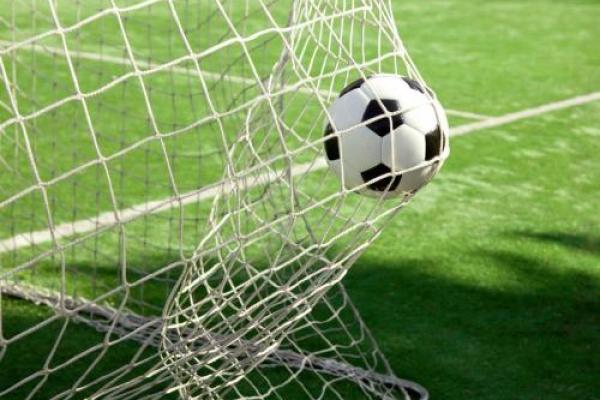
  • Football going into Football Net

    The Maths of the World Cup

    9 June, 2026

    The FIFA World Cup starts this week and around the world millions of people are about to become football-obsessed.

    But naturally, we are also interested in the maths underpinning the game. We have collected together some of our favourite articles from the last few years to help get the ball rolling (sorry) for the next few weeks of football-madness. We've got explainers for everything about the beautiful game from penalties to the stadiums to the ball itself.

    The beautiful game (theory) of why penalty takers ignore statistics

    Why do penalty takers not heed the advice of statisticians? We find out with a little game theory.

    Stadium maths

    In this podcast Paul Shepherd tells us about the maths of football stadiums and why his work required him to listen to Belgian techno.
    icon

    Hitting the spot

    What's the best spot to aim a penalty at?

    A fly walks round a football

    What makes a perfect football? The ball must be round, retain its shape, be bouncy but not too lively and, most importantly, be capable of impressive speeds. We find out that this last point is all down to the ball's surface, the most prized research goal in ball design.

    Making penalties fairer

    Is the proposed ABBA rule for penalty shootouts really fairer than the existing rule? Maths shows that it is, and also suggests another, more subtle rule.

    If you can't bend it, model it!

    Learn about the aerodynamics of footballs and perfect your free kick.

    Where are England footballers born?

    Which region of England produces the most England players?

    Blink and you'll miss it: The free kick in football (part I)

    Free kicks will deliver much of the drama in the football world cup this summer. But how should strikers approach them and how does the design on the ball impact on its behaviour in flight? Maths can give us answers...

    Blink and you'll miss it: The free kick in football (part II)
    In the first part of this article we let maths set the scene for a free kick. Now we continue the drama, tracing the trajectory of the ball throughout the milliseconds it takes it to reach the goal line.

    When is a goal not a goal?

    Remember Frank Lampard's disallowed goal in the 2010 World Cup match against Germany? The ball hit the crossbar, landed well behind the line but then bounced out again. And it all happened too quickly for the ref to spot it was a goal. How these kind of (non)-goals happen and what can we do about them?
    Read more about...
    mathematics in sport
    statistical prediction
    football
    • Log in or register to post comments

    Read more about...

    mathematics in sport
    statistical prediction
    football
    University of Cambridge logo

    Plus is part of the family of activities in the Millennium Mathematics Project.
    Copyright © 1997 - 2026. University of Cambridge. All rights reserved.

    Terms