Free, from top to bottom?
Freedom and physics
Maths behind the rainbow
Keats complained that a mathematical explanation of rainbows robs them of their magic, conquering "all mysteries by rule and line". But rainbow geometry is just as elegant as the rainbows themselves.
Join the celebration of mind!
Exploding stars clinch Nobel Prize
What is time?
Convex is complex
The Abel Prize 2011 goes to John Milnor
Picking holes in mathematics
In the 1930s the logician Kurt Gödel showed that if you set out proper rules for mathematics, you lose the ability to decide whether certain statements are true or false. This is rather shocking and you may wonder why Gödel's result hasn't wiped out mathematics once and for all. The answer is that, initially at least, the unprovable statements logicians came up with were quite contrived. But are they about to enter mainstream mathematics?
Searching for the missing truth
Many people like mathematics because it gives definite answers. Things are either true or false, and true things seem true in a very fundamental way. But it's not quite like that. You can actually build different versions of maths in which statements are true or false depending on your preference. So is maths just a game in which we choose the rules to suit our purpose? Or is there a "correct" set of rules to use? We find out with the mathematician Hugh Woodin.
Hidden dimensions
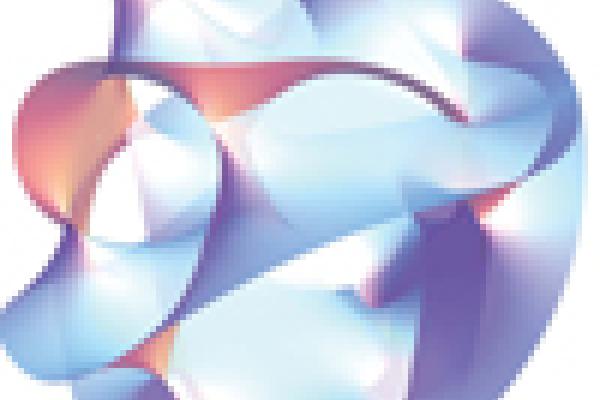
That geometry should be relevant to physics is no surprise — after all, space is the arena in which physics happens. What is surprising, though, is the extent to which the geometry of space actually determines physics and just how exotic the geometric structure of our Universe appears to be. Plus met up with mathematician Shing-Tung Yau to find out more.