Article

Circles rolling on circles

Imagine a circle with radius 1 cm rolling completely along the circumference of a circle with radius 4 cm. How many rotations did the smaller circle make? Be prepared for a surprise!
Article
Billiards

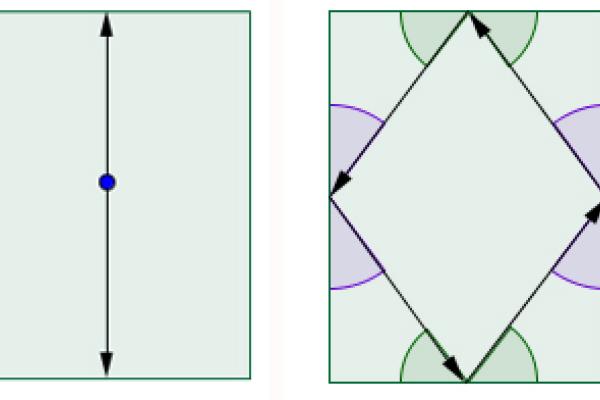
Chaos on the billiard table

If you thought that billiards was a harmless game to play in the pub, think again. It's a breeding ground for chaos!

Article

Pointless: The maths of TV gameshows

One thing that makes TV game shows fun to watch is that there's usually an element of luck involved. But how (un)lucky is (un)lucky? We look at the probabilities of two popular examples.
Article

Why did nature choose quantum theory?

To create energy from information you would need to break the second law of thermodynamics — that's impossible in the real world, but could theories that do break it shed light on why nature is the way it is?
Collection

Can information be turned into energy?

In the latest online poll of our Information about information project you told us that you'd like an answer to this question. We asked Seth Lloyd, an expert on information at the Massachusetts Institute of Technology, and here is an answer. We also bring you two related articles from FQXi who are our partners on this project. Happy reading!
Podcast

When worlds collide

Fields medallist Cédric Villani talks to us about our solar system, chaos, and what it's like being a mathematical superstar.
Article

Polar power

Like spirals and flowers? Then you'll love polar coordinates and the pretty pictures they allow you to draw!
Article

Going with the flow

By the 1970s physicists had successfully tamed three of the fundamental forces using a sophisticated construct called quantum field theory. The trouble was that the framework seemed to fall apart when you looked at very high or very low energy scales. So how could these be thought of as valid theories? It's a question physicists are still grappling with today.