Maths in a minute: Cognitive bias
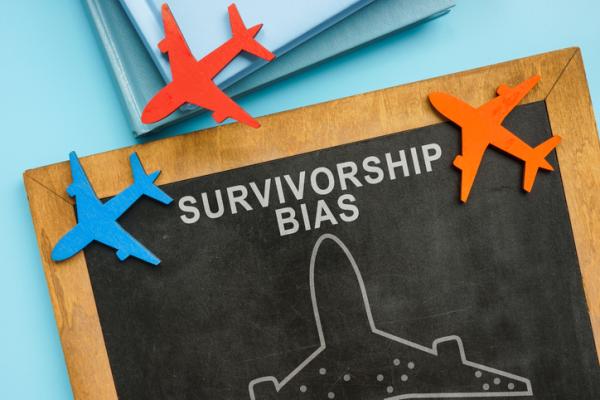
Cognitive biases shape how we understand. Being aware of them gives us a better chance of avoiding them.
What does it mean to say there's a 30% chance of rain today?
Does knowing statistics about a whole population tell you how they apply to you?
The way we talk about numbers affects the decisions people make - so think carefully about what you say!
How shocking is it when your risk of getting a particular disease doubles?
How can statistics help us to make informed decisions. Find out with this brief explanation of hypothesis testing.
When a new infectious disease enters a population everything depends on who catches it — superspreaders or people with few contacts who don't pass it on. We investigate the stochastic nature of the early stages of an outbreak.
We talk to David Spiegelhalter about eggs, politics, coins and his new book The art of uncertainty.
Learn how lengths, areas, and volumes generalise to the concept of measure, and how this relates to integration and probability.
If you've flipped heads 10 times what's the next flip most likely to be? Bayes' theorem has the answer, not just for the coin, but for the pursuit of science generally.
Trying to make a prediction about the world based on dodgy data? Then data assimilation has the answer!
The Abel Prize 2024 has been awarded to Michel Talagrand for ground breaking contributions to probability theory and functional analysis.