
Marianne Freiberger
Hooray for Higgs!
"It's a great day for particle physics," says Ben Allanach, a theoretical physicist at the University of Cambridge. "It's very exciting, I think we're on the verge of the Higgs discovery." And indeed, it seems like the Large Hadron Collider at CERN has given particle physics an early Christmas present — compelling evidence that the famous Higgs boson exists.
Making gold for 2012
Flying home with quantum physics
Quantum mechanics is usually associated with weird and counterintuitve phenomena we can't observe in real life. But it turns out that quantum processes can occur in living organisms, too, and with very concrete consequences. Some species of birds use quantum mechanics to navigate. And as Plus found out at a recent conference, studying these little creatures' quantum compass may help us achieve the holy grail of computer science: building a quantum computer.
The Fields Medals 2010
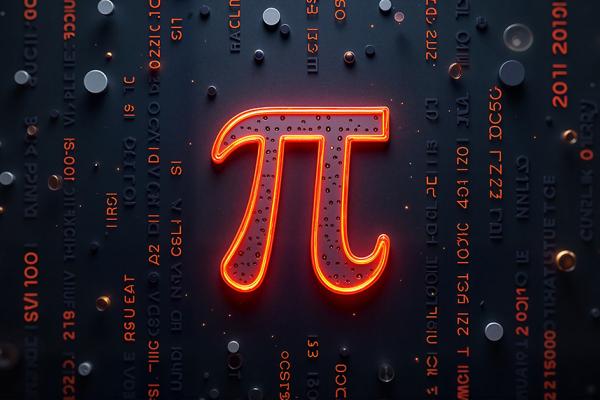
Pi day magic revealed
On March 14 2010 a mathematician and a magician teamed up to perform what they believed to be the world's largest live magic trick. The trick involved a thousand volunteers from the around the world who, using free choice, each came up with a number that was only known to themselves. And although the volunteer might be on the other side of the globe, the mathematician and the magician were able to read their mind and tell them which number they had chosen.
Reconstructing the tree of life
Next year is a great one for biology. Not only will we celebrate 150 years since the publication of On the origin of species, but also 200 years since the birth of its author, Charles Darwin. At the heart of Darwin's theory of evolution lies a beautifully simple mathematical object: the evolutionary tree. In this article we look at how maths is used to reconstruct and understand it.
Winning background research
The right spin: how to fly a broken space craft
On the 25th of May 1997 a dramatic collision tore a hole into the space station Mir and sent it hurtling through space. As NASA astronaut Michael Foale tells Plus, the fate of Mir and its crew hinged on a classical set of equations.