

From abstract nonsense to essential tool
Pure mathematics has a habit of becoming useful in the real world decades or centuries after it was first developed. An example comes from a research programme which took place at the Isaac Newton Institute for Mathematical Sciences (INI) in Cambridge in 2025, called Quantum field theory with boundaries, impurities, and defects. As the programme unfolded it became clear that category theory, which had previously been denounced as "abstract nonsense", is essential in our understanding of exotic materials that may help us to build quantum computers.
We talked to Frank Verstraete, one of the organisers of the programme, and programme participant Liang Kong to find out more. The articles below tell the story of the rise of category theory in theoretical physics.

Water, ice and broken symmetry
Phase transitions are dramatic processes in which a material suddenly changes its nature. An example is water freezing to ice. Traditionally, phase transitions have been described in terms of symmetries that suddenly break. This article explores how.

The Quantum Hall Effect: Protected by topology
The quantum Hall effect is a curious phenomenon and serves as an example for phases of matter that can't be explained in terms of symmetry breaking. This article explores the effect and what it has to do with the mathematical area of topology.
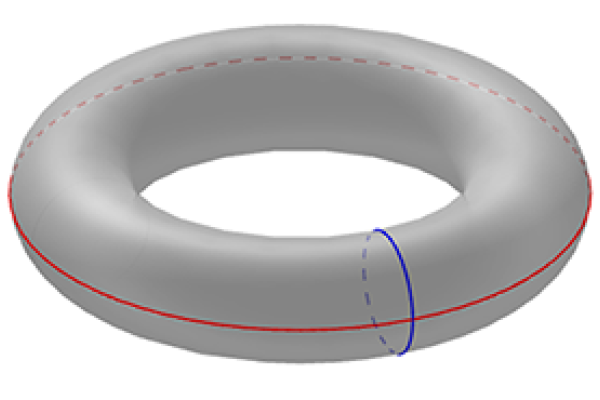
New phases of matter: Abstract nonsense comes good
To describe the quantum Hall effect the traditional mathematics of symmetry is no longer sufficient. Enter category theory. This article has a look at the theory's use in the area.
Background reading
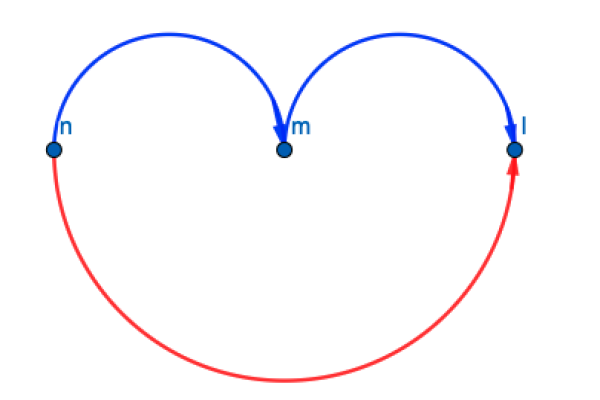
Maths in a minute: Category Theory
A short explanation of the fundamentals of category theory.
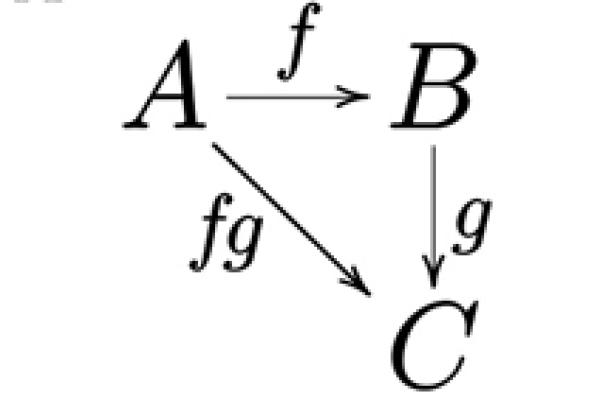
Category theory: From genes to gravity
A quick introduction to an abstract concept that's useful in anything from genetics to cosmology.
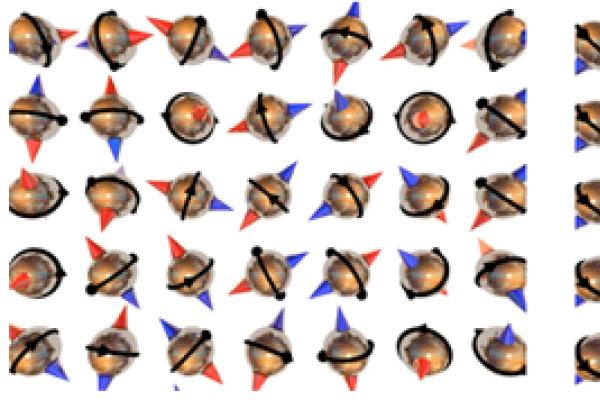
Maths in a minute: Phase transitions
We experience phase transitions every day, but they are some of the most dramatic events nature presents us with. Here's a quick introduction.
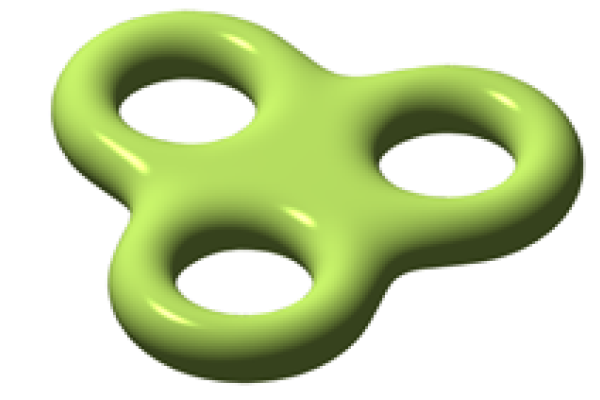
Maths in a minute: Topology
When you let go of the notions of distance, area, and angles, all you are left with is holes.

A ridiculously short introduction to some very basic quantum mechanics
Groups: The basics
Group theory is the mathematics of symmetry and structure. On this page, find out what a group is and how to think about them.

Symmetry making and symmetry breaking
A closer look at the power of symmetry in physics.
This content was produced as part of our collaboration with the Isaac Newton Institute for Mathematical Sciences (INI) – you can find all the content from the collaboration here.
The INI is an international research centre and our neighbour here on the University of Cambridge's maths campus. It attracts leading mathematical scientists from all over the world, and is open to all. Visit www.newton.ac.uk to find out more.
