
Home
plus.maths.org

Secondary menu

  • My list
  • About Plus
  • Sponsors
  • Subscribe
  • Contact Us
  • Log in
  • Main navigation

  • Home
  • Articles
  • Collections
  • Podcasts
  • Maths in a minute
  • Puzzles
  • Videos
  • Topics and tags
  • For

    • cat icon
      Curiosity
    • newspaper icon
      Media
    • graduation icon
      Education
    • briefcase icon
      Policy

    Popular topics and tags

    Shapes

    • Geometry
    • Vectors and matrices
    • Topology
    • Networks and graph theory
    • Fractals

    Numbers

    • Number theory
    • Arithmetic
    • Prime numbers
    • Fermat's last theorem
    • Cryptography

    Computing and information

    • Quantum computing
    • Complexity
    • Information theory
    • Artificial intelligence and machine learning
    • Algorithm

    Data and probability

    • Statistics
    • Probability and uncertainty
    • Randomness

    Abstract structures

    • Symmetry
    • Algebra and group theory
    • Vectors and matrices

    Physics

    • Fluid dynamics
    • Quantum physics
    • General relativity, gravity and black holes
    • Entropy and thermodynamics
    • String theory and quantum gravity

    Arts, humanities and sport

    • History and philosophy of mathematics
    • Art and Music
    • Language
    • Sport

    Logic, proof and strategy

    • Logic
    • Proof
    • Game theory

    Calculus and analysis

    • Differential equations
    • Calculus

    Towards applications

    • Mathematical modelling
    • Dynamical systems and Chaos

    Applications

    • Medicine and health
    • Epidemiology
    • Biology
    • Economics and finance
    • Engineering and architecture
    • Weather forecasting
    • Climate change

    Understanding of mathematics

    • Public understanding of mathematics
    • Education

    Get your maths quickly

    • Maths in a minute

    Main menu

  • Home
  • Articles
  • Collections
  • Podcasts
  • Maths in a minute
  • Puzzles
  • Videos
  • Topics and tags
  • Audiences

    • cat icon
      Curiosity
    • newspaper icon
      Media
    • graduation icon
      Education
    • briefcase icon
      Policy

    Secondary menu

  • My list
  • About Plus
  • Sponsors
  • Subscribe
  • Contact Us
  • Log in
  • Drum

    Vibration revelations: Geometric spectral theory

    16 October, 2026

    This year the Isaac Newton Institute for mathematical Sciences in Cambridge hosted a research programme called Geometric spectral theory and applications. It's motivated by a question that was posed by the physicist Mark Kac back in 1966: can you hear the shape of a drum?

    The question leads to surprisingly rich mathematics that has a huge rage of applications. Broadly speaking it's about figuring out what vibrations associated with a (mathematical) object can tell you about the object itself. The following content gives a little more insight.
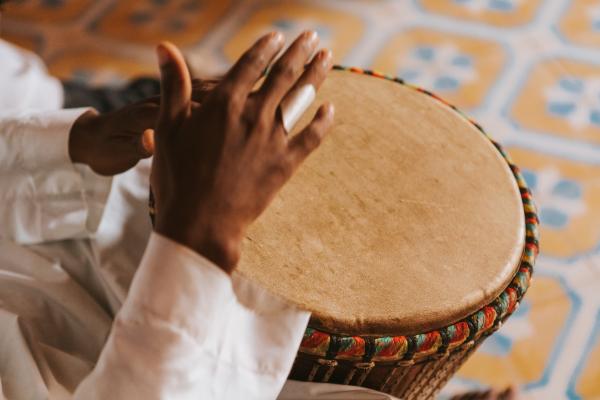
    Drum

    Can you hear the shape of a drum?

    The sound of a plucked string depends on how long it is, so you can hear the length of a string. But can you hear the shape of a drum? 
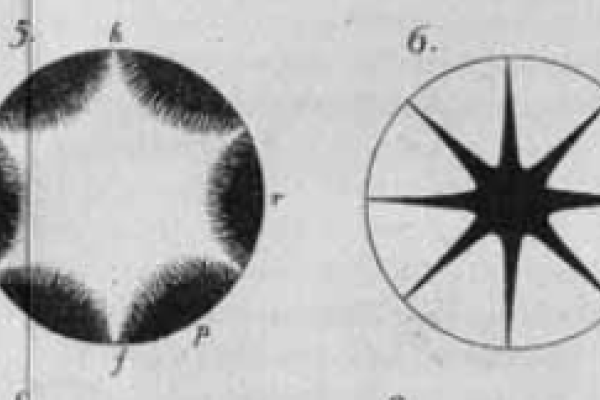
    Two diagrams

    Can you see the sound of a drum?

    If you sprinkle sand on a vibrating plate it forms the most beautiful patterns. We explore why that happens, what it has to do with mathematical pioneer Sophie Germain, and how the question opens up a huge range of maths.
    Catching waves with the Laplacian

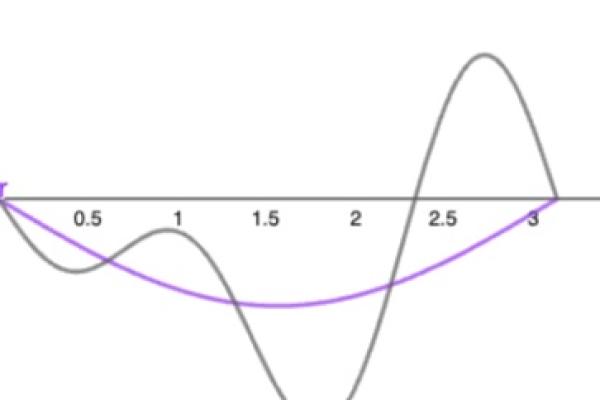
    The Laplacian operator turns up all over maths.  Here's a reasonably light-touch introduction and a look at why it forms part of the wave equation.
    a wave

    The harmonics of a string

    When you pluck a guitar string it vibrates at many resonant frequencies at once. What might that look like? Find out with our animation.

    This content forms part of our collaboration with the Isaac Newton Institute for Mathematical Sciences (INI) – you can find all the content from the collaboration here.

    The INI is an international research centre and our neighbour here on the University of Cambridge's maths campus. It attracts leading mathematical scientists from all over the world, and is open to all. Visit www.newton.ac.uk to find out more.

    Isaac Newton Institute Logo
    Read more about...
    mathematics and music
    Laplacian operator
    wave
    geometry
    • Log in or register to post comments

    You might also like

    podcast

    From clicks to chords

    Is it possible to write unique music with the limited quantity of notes and chords available? We ask musician Oli Freke!
    article

    Maths in a minute: Maths and music

    Explore the connections between maths and music!

    article
    Neck of a violin

    Why is the violin so hard to play?

    As anyone starting out knows, the violin is a difficult instrument. It takes time before the novice player can expect to produce a musical note at the desired pitch, instead of a whistle, screech or graunch. Jim Woodhouse and Paul Galluzzo explain why.

    Read more about...

    mathematics and music
    Laplacian operator
    wave
    geometry

    Plus delivered to you

    Keep up to date with Plus by subscribing to our newsletter or following Plus on X, Bluesky, Facebook or LinkedIn.

    University of Cambridge logo
    Twitter / X logo Bluesky logo LinkedIn logo

    Plus is part of the family of activities in the Millennium Mathematics Project.
    Copyright © 1997 - 2026. University of Cambridge. All rights reserved.

    Terms