Living Proof: Building digital hearts
A digital heart might sound like science fiction, but these personalised mathematical descriptions of patients' hearts are already being put to the test.

Can topological data analysis create a revolution in the life sciences?
Find out about a pioneering new project which builds mathematical models together with the people who are affected.
Find out about a pioneering new project which builds mathematical models together with the people who are affected by them.
To avoid full school closures in the next pandemic, or even epidemic, epidemiologists need crucial information from schools, students, and parents.
When a new infectious disease enters a population everything depends on who catches it — superspreaders or people with few contacts who don't pass it on. We investigate the stochastic nature of the early stages of an outbreak.
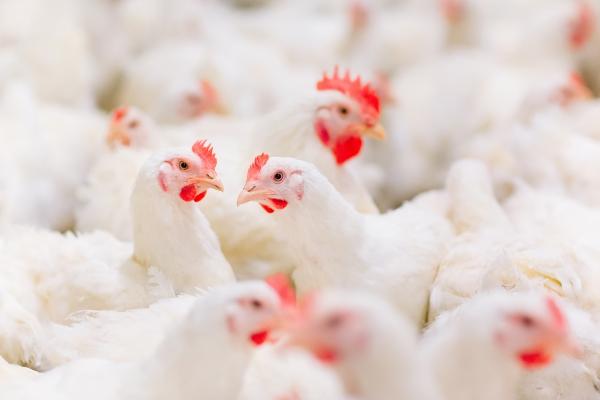
With bird flu spreading through cattle herds in the US and infecting humans, the diseases poses a severe threat to wild life, poultry and also people. What can mathematical modelling do to help?
We look at the recent rise in measles cases, why it has led to a national health incident being declared, and what can be done to avert the threat.
How does maths help in tackling infectious diseases? Join Julia Gog to find out in this series of videos and articles, and have a go at modelling diseases yourself!
With just some simple arithmetic, you can build a basic mathematical model of how a disease might spread. Julia Gog explains how, and there's also some Lego action...
You can explore how we might extend our model but running your own epidemic with our Lucky Dip interactivity. Follow along with Julia as she paves the way to a model that is very similar to the mathematics disease modellers use every day.