







mathematical modelling

Helen Thompson works for Sainsbury's Supermarkets as a Sales Forecasting Manager. The Plus team paid her a visit at Drury House on the banks of the Thames in London.

Why can't human beings walk as fast as they run? And why do we prefer to break into a run rather than walk above a certain speed? Using mathematical modelling, R. McNeill Alexander finds some answers.
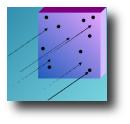
Arguably, the exponential function crops up more than any other when using mathematics to describe the physical world. In the first of two articles on physical phenomena which obey exponential laws, Ian Garbett discusses light attenuation - the way in which light decreases in intensity as it passes through a medium.

Arguably, the exponential function crops up more than any other when using mathematics to describe the physical world. In the second of two articles on physical phenomena which obey exponential laws, Ian Garbett discusses radioactive decay.

Jim McElwaine tells Plus how he combines his two loves - mathematics and mountaineering - in avalanche research.

Helen is a defence analyst with the MoD, using her maths skills to help defend the nation. Plus finds out about her career path.
One million dollars is waiting to be won by anyone who can solve one of the grand mathematical challenges of the 21st century. In the second of two articles, Chris Budd looks at the well-posedness of the Navier-Stokes equations.
Mathematics shows that open source software beats closed source software in the race to fix bugs.
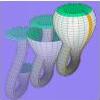
In the first of a new series 'Imaging Maths', Plus takes an illustrated tour of an extraordinary geometric construction: the Klein bottle.

If you had a crystal ball that allowed you to see your future, what would you arrange differently about your finances? Plus talks to the Government Actuary, Chris Daykin about the pensions crisis, and how actuaries use statistical and modelling techniques to plan for all our futures.

André Léger studies the fluid mechanics of food travelling through the intestines for consumer goods giant Unilever.
In his second article, David Henwood explains the role of mathematics in the design of Hi-Fi loudspeakers.
New technology has provided us with some amazing images - satellite images, medical images, even images beamed back from Mars. Julian Stander tells us about the increasing role of statistics in interpreting them.
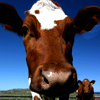
According to Darwin, natural selection is the driving force of evolution. It's a beautifully simple idea, but given the thousands of years that are involved, nobody has ever seen it in action. So how can we tell whether or not natural selection occurs and which of our traits are a result of it? In this article Charlotte Mulcare uses milk to show how maths and stats can provide genetic answers.

If you've ever watched a flock of birds flying at dusk, or a school of fish reacting to a predator, you'll have been amazed by their perfectly choreographed moves. Yet, complex as this behaviour may seem, it's not all that hard to model it on a computer. Lewis Dartnell presents a hands-on guide for creating your own simulations — no previous experience necessary.

Penguin eggs are not something you'd normally associate with maths, but they are right there on the archives of the Smith Institute, an organisation helping businesses use maths to solve their problems. Claudia Centazzo tells us about her role at the institute, selling maths to unsuspecting business people.

The flocking behaviour of birds, the spread of diseases and the Cuban missile crisis — all of these and much more can be modelled mathematically. In our second teacher package we bring together all Plus articles on mathematical modelling, ready for use in classroom discussions or students projects.

Lewis Dartnell turns the universe into a matrix to model traffic, forest fires and sprawling cities.

Rupa Patel never wanted to be a financial engineer — she wanted to be a maths teacher. However, her skills in conveying difficult mathematical concepts to others, as well as a love of maths, enticed her into the exciting field of financial mathematics. Now she models risk, travels Europe and occasionally finds time to herself to examine the maths of her job in detail.

We live in a world full of information and it's a statistician's job to make sense of it. In this article Dianne Cook explores ways of analysing data and shows how they can be applied to anything from investigating diners' tipping behaviour to understanding climate change and genetics.

The recent news of the great Indian batsman Sachin Tendulkar surpassing West Indian Brian Lara's record number of test runs has given maths-loving cricket geeks another opportunity to pull out their calculators and Excel spreadsheets. Marc West is openly one of these nuts and did just that.
Browse all articles from the Plus sports page.

Game theorists model the evolution of trust and trustworthiness
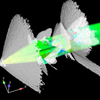
In 1997 Andy Green was the first to break the sound barrier in his car Thrust SSC, which reached speeds of over 760mph. Now he and his team want to push things even further with a car called Bloodhound, designed to reach the dizzy heights of 1,000mph, about 1.3 times the speed of sound. Ben Evans explains how maths is used to build this car.

Why do the rich and popular get richer and more popular?
David Spaughton and Anton Merlushkin work for Credit Suisse First Boston, where they provide traders in the hectic dealing room with software based on complicated mathematical models of the financial markets. PASS Maths interviewed them at their offices in Canary Wharf in London.

Jose Munoz explains how engineering can allow you to explore the unknown, from understanding how mechanical structures bend to investigating the way genes affect the shape of embryos.
Jet engines, aircraft carriers and telecommunications networks — these are just some of the things that Nira Chamberlain has modelled. And while he's figuring out defence logistics, he's also pursuing a pure mathematical interest in games. Find out what mathematical modelling can do and why it can also make you slim and fluent in French.
A model borrowed from engineering may help save coral reefs
The Arctic ice cap is melting fast and the consequences are grim. Mathematical modelling is key to predicting how much longer the ice will be around and assessing the impact of an ice free Arctic on the rest of the planet. Plus spoke to Peter Wadhams from the Polar Ocean Physics Group at the University of Cambridge to get a glimpse of the group's work.

What's your strategy for love? Hold out for The One, or try and avoid the bad ones? How long should you wait before cutting your losses and settling down with whoever comes along next? John Billingham investigates and saves the national grid in the process.

Why traffic jams occur for seemingly no reason
Umbrella or no umbrella? New advances in weather forecasting will help us dodge hurricanes and protect against floods.

Modelling Olympic success

Have you got as many friends as you think?
The 2004 Abel Prize celebrates one of the great landmarks of 20th century mathematics.
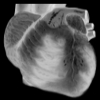
A mathematical understanding of what makes our hearts beat could save lives.
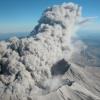
Can maths help save lives by making more accurate predictions of future volcanic eruptions?

A mathematical approach might simplify studying how our genes operate.

Chuck Gill caught the space bug as a child when watching Alan Shepherd launch into space. Since then he's worked as a US Air Force navigator, a satellite operator, and in the US intelligence service. These days he's busy reducing carbon emissions and preparing London for the 2012 Olympics. Plus went to see him to find out more about his career.

Computer-generated art is on the rise, and with it comes a further blurring of the boundaries between maths and art. Lewis Dartnell looks at some stunning examples.

Explorers return with news from the Arctic

Ground breaking work in uncovering optimal funding mechanisms in financial markets
The risks in Who wants to be a millionaire?
Expedition sets out to determine the North Pole's future

Survival modelling of albums in the Top 100 casts light on the impact of file sharing

Fractal Modelling of Pollock paintings called into question
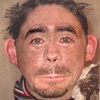
Changing your facial appearance with maths

Loquacious maths

Modelling terrorist activity

Food evolution

Generalists can thrive in a world of specialists

Mathematics tackles an eternal question

To study a system, mathematicians begin by identifying its most crucial elements, and try to describe them in simple mathematical terms. As Phil Wilson tells us, this simplification is the essence of mathematical modelling.

Using sand to create new mathematical models

A multi-disciplinary approach to complexity

The European Science Foundation backs systems biology

New insights into gene permutations

How does it spread?

Will the Ashes result depend on the weather?

How do we know how many people have got it?