The end of human mathematics or AI golden age?
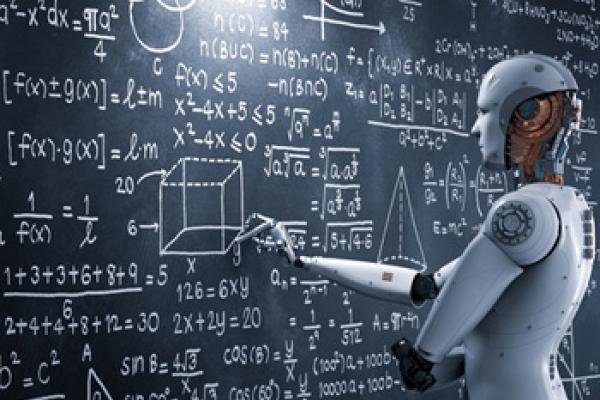
Mathematicians met at the Royal Society to decide on their response to the AI revolution in mathematics. Is it the end of human maths or the beginning of a golden age?


Has AI really solved one of the hardest problems in mathematics? We talk to Professor Chris Budd OBE to find out.
On September 8th, 2026, OpenAI announced that one of its systems had solved the Navier-Stokes Millennium Problem. But has the problem really been solved? What exactly was the contribution of AI? And what does the advance of AI on mathematics mean for the field?
This summer has seen rapid advances in artificial intelligence solving hard, and iconic, mathematical problems. The developments are exciting to some mathematicians, but others worry about what they mean for the future of the field. This content looks at some of the questions AI has solved, how it can be a help, and what mathematicians have been discussing.
AI has recently solved some very hard maths problems. Did AI really do this on its own? What does it mean for the future of mathematics? And how should the maths community respond?
There's been an announcement that an AI system solved one of the most famous problems in maths. Here's a quick look at the problem and why the announcement is significant.
Around 1,000 articles are published on arXiv every day — from the proof of the Poincaré Conjecture to research from AI companies like DeepSeek and Gemini. In this podcast we go behind the scenes to learn what it takes to run such a huge mathematical institution.
Hot weather, cold air conditioning, and fantastic mathematics — we report on our experience at this year's International Congress of Mathematicians.
How is AI impacting mathematics today? Geordie Williamson tells us about recent work resulting from genuine collaboration between human and machine.
What is the potential of artificial intelligence (AI) in scientific research? In this episode, Cambridge Professor James Fergusson talks about some cutting-edge research which addresses this question.
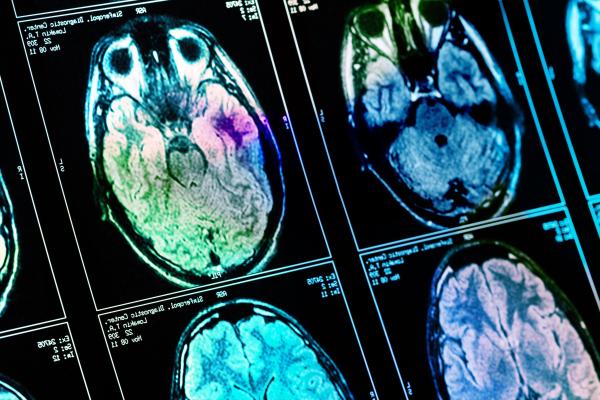
Find out how deep learning can help improve the images produced by MRI, CT and PET scans, making patients more comfortable and cutting NHS waiting lists.
How confident is the Large Language Model chatbot that its answers are correct? And how confident can we be about this confidence? This article investigates.